Villa SP
Krumpendorf |Private, Exterior
Project Description
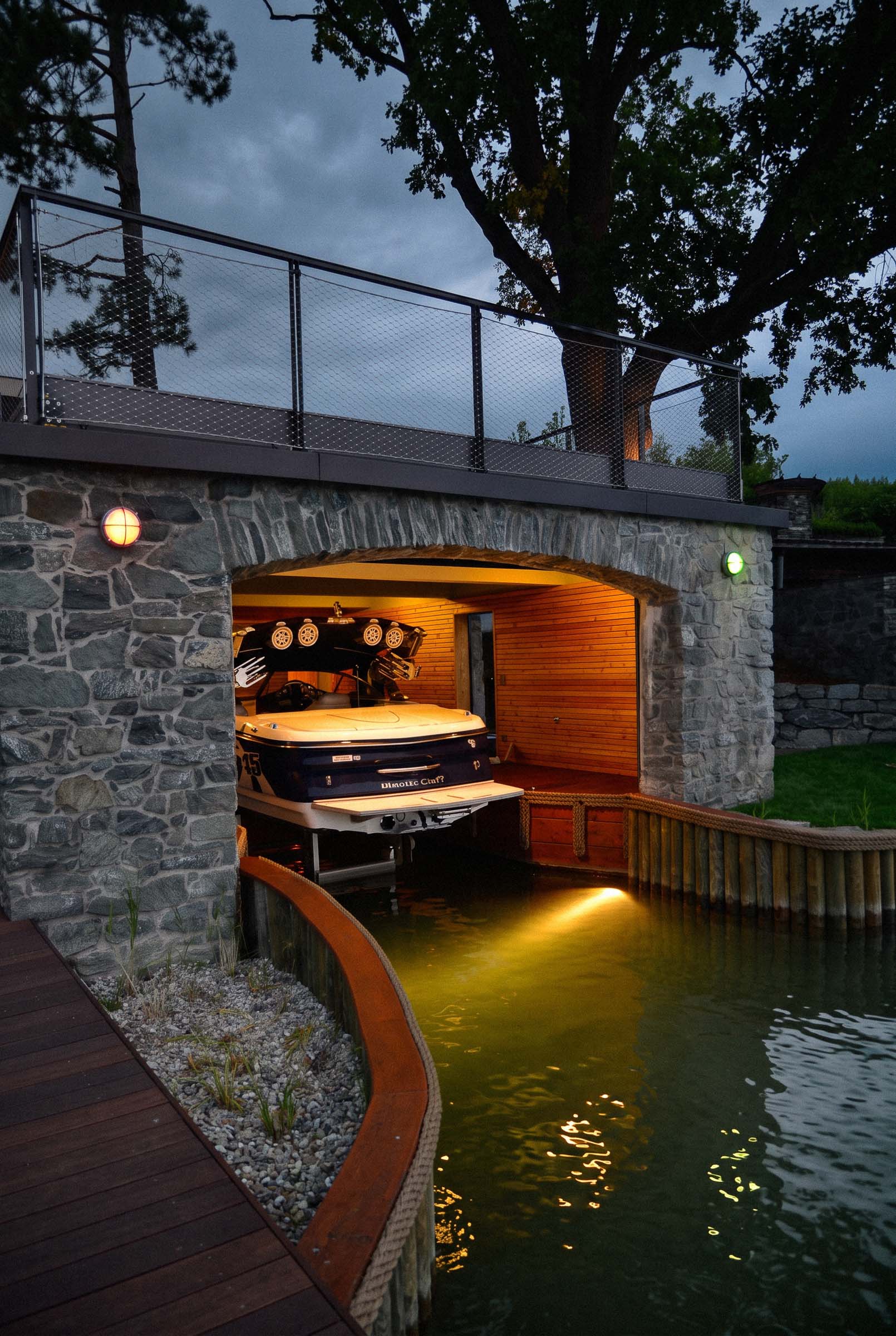
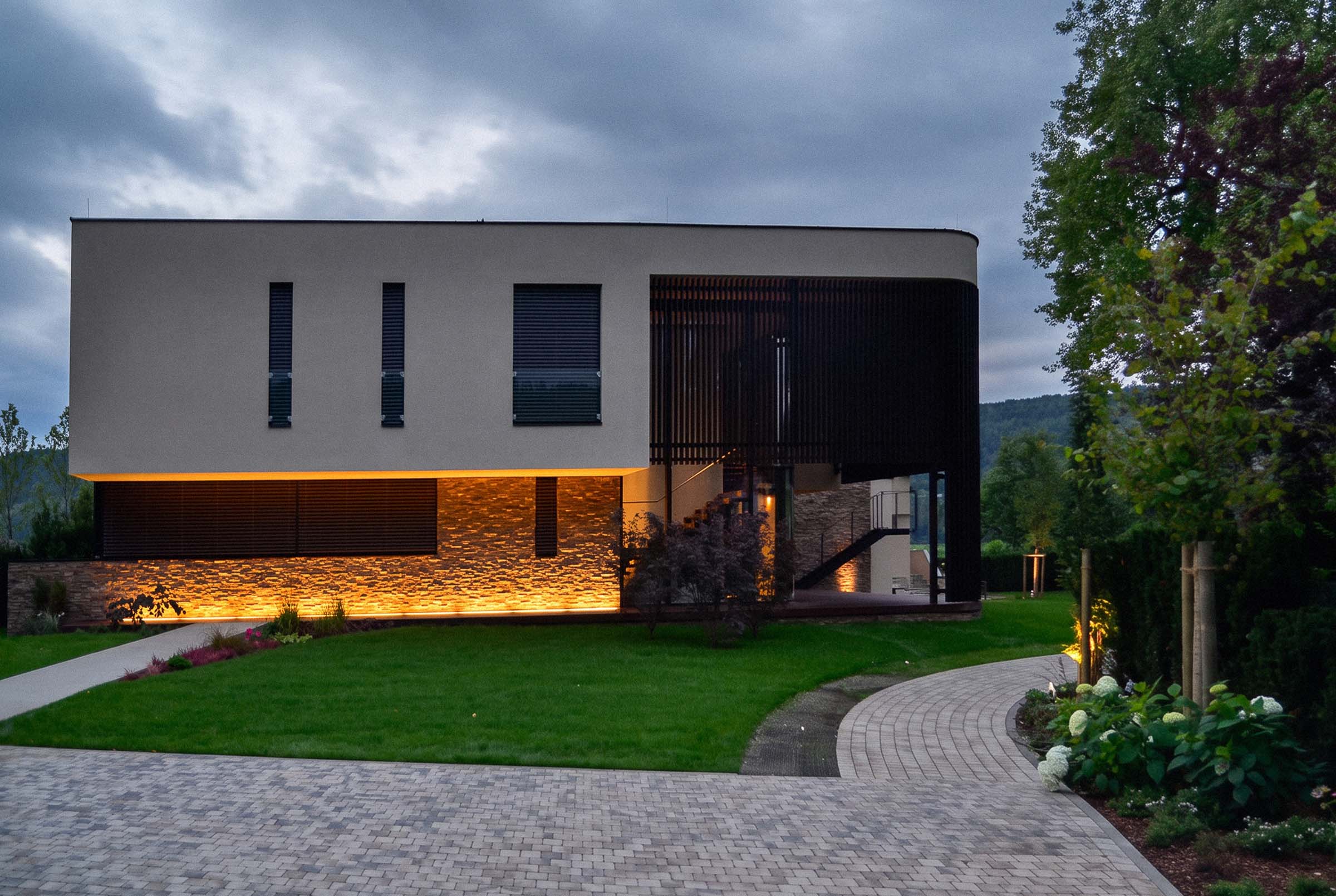
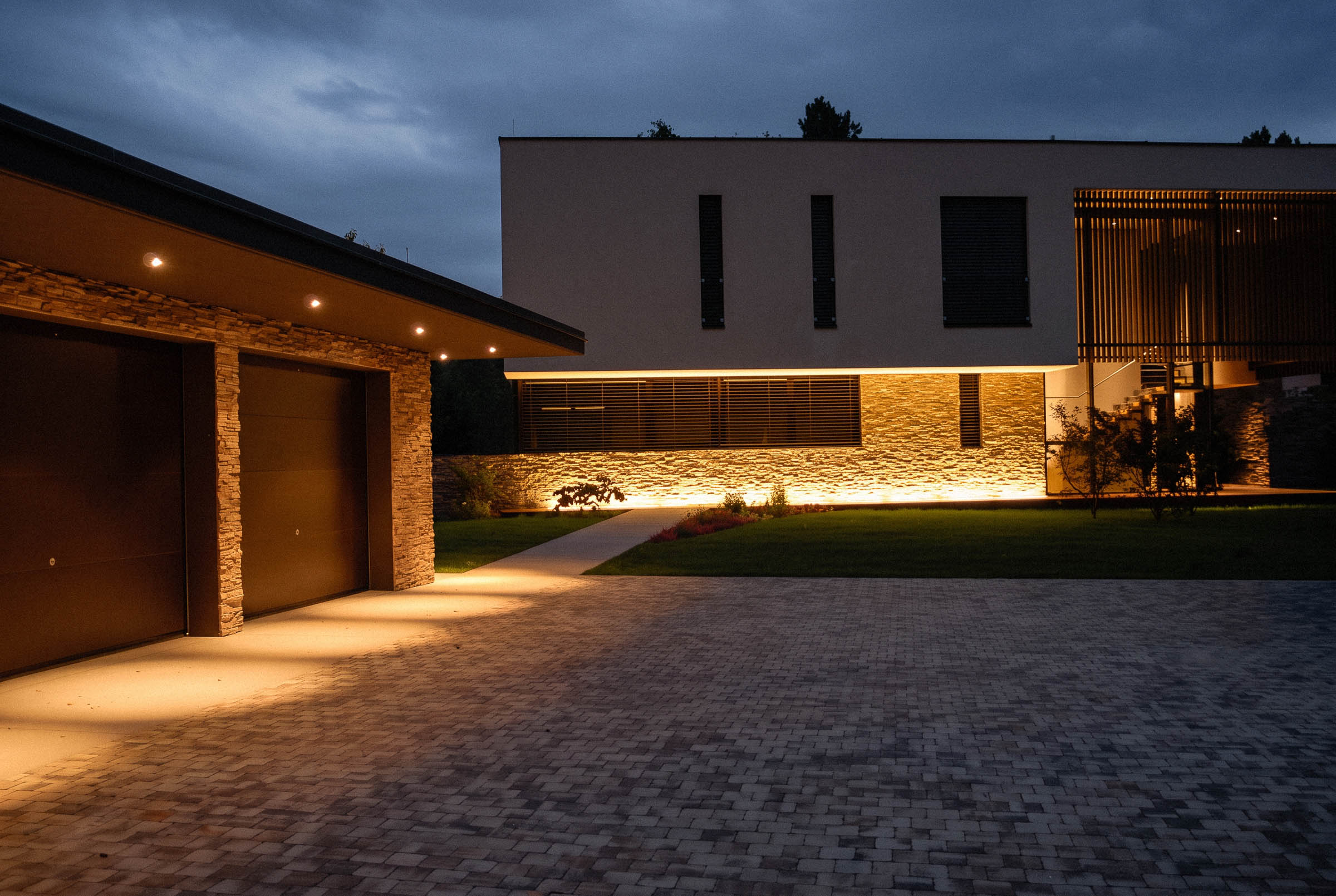
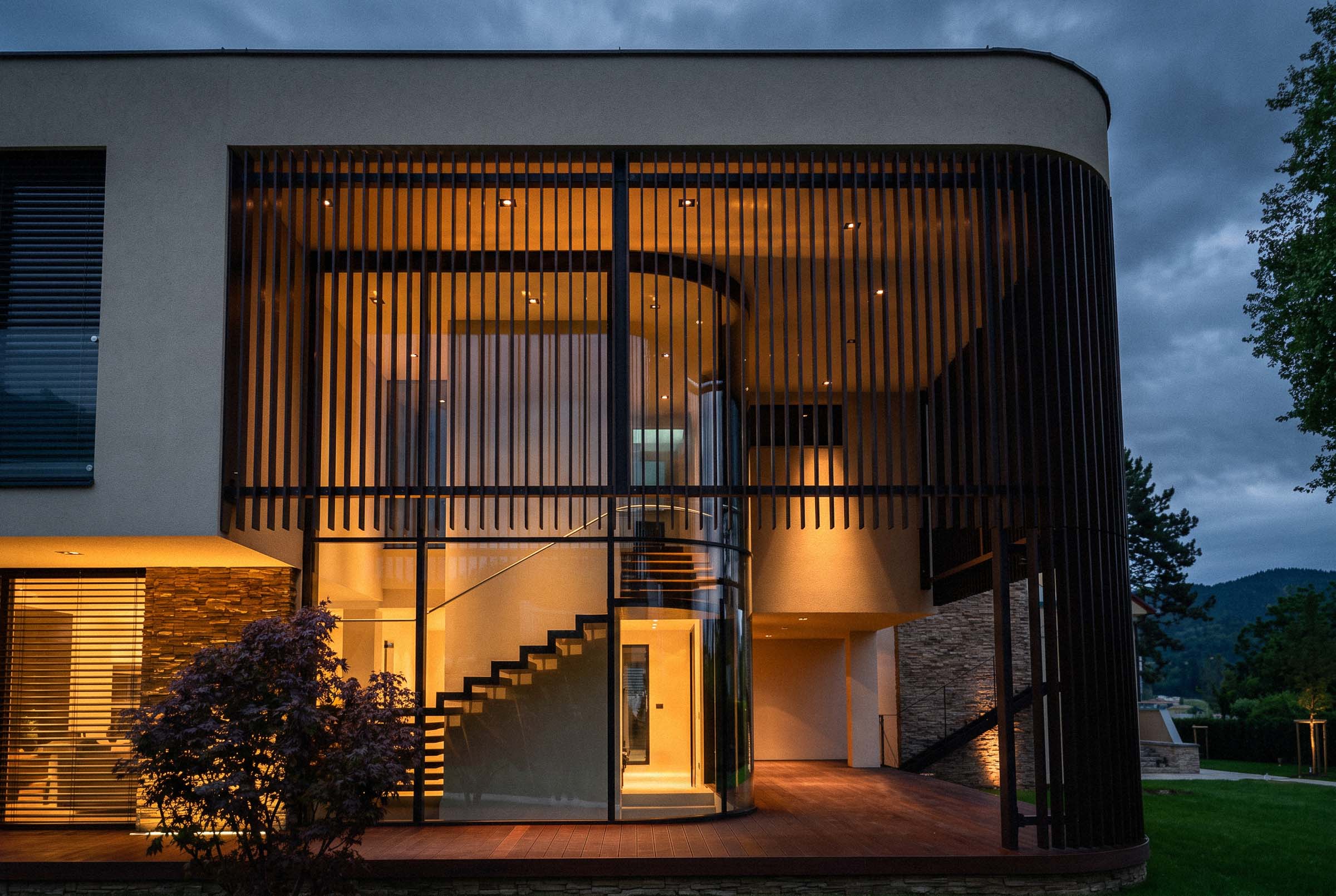
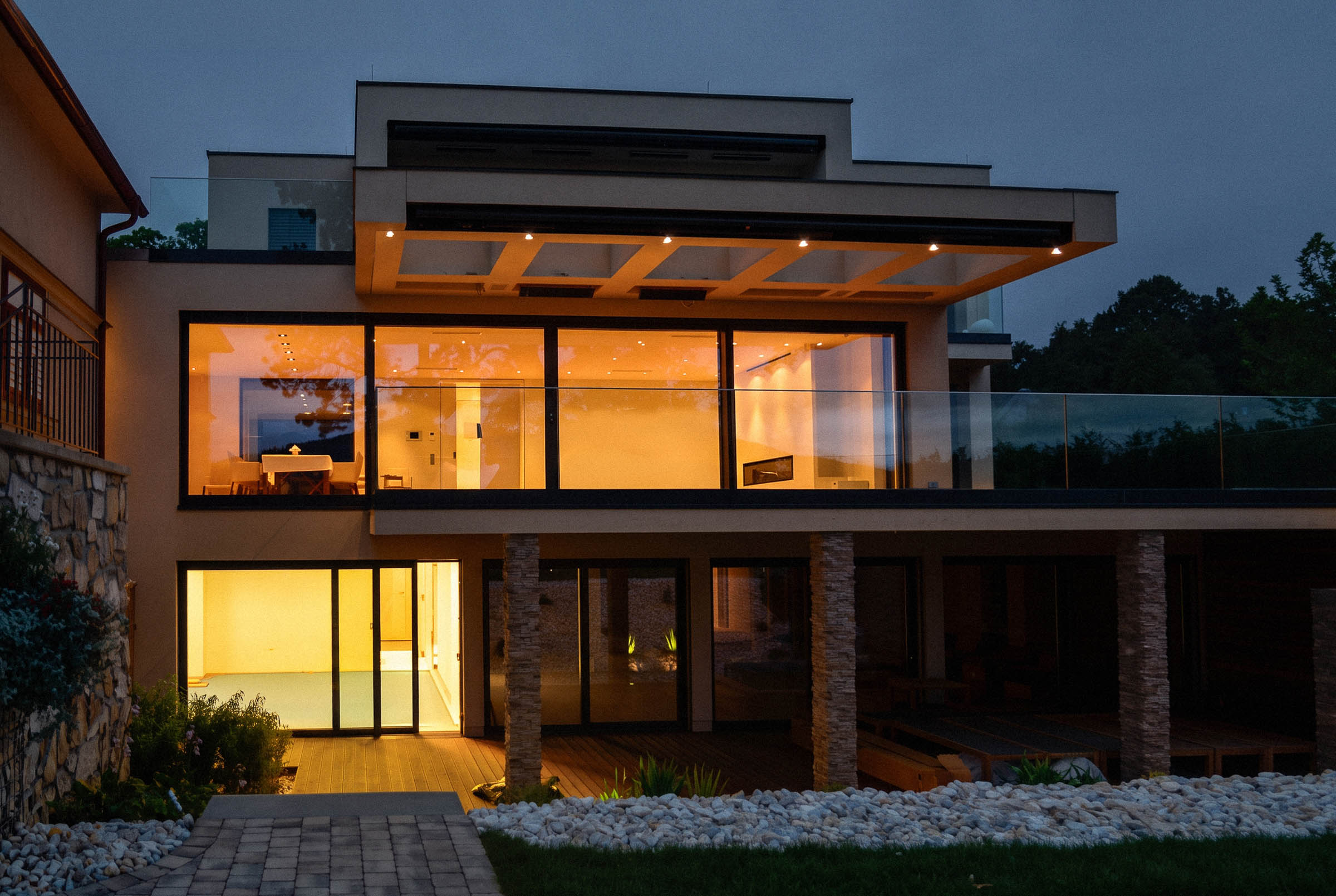
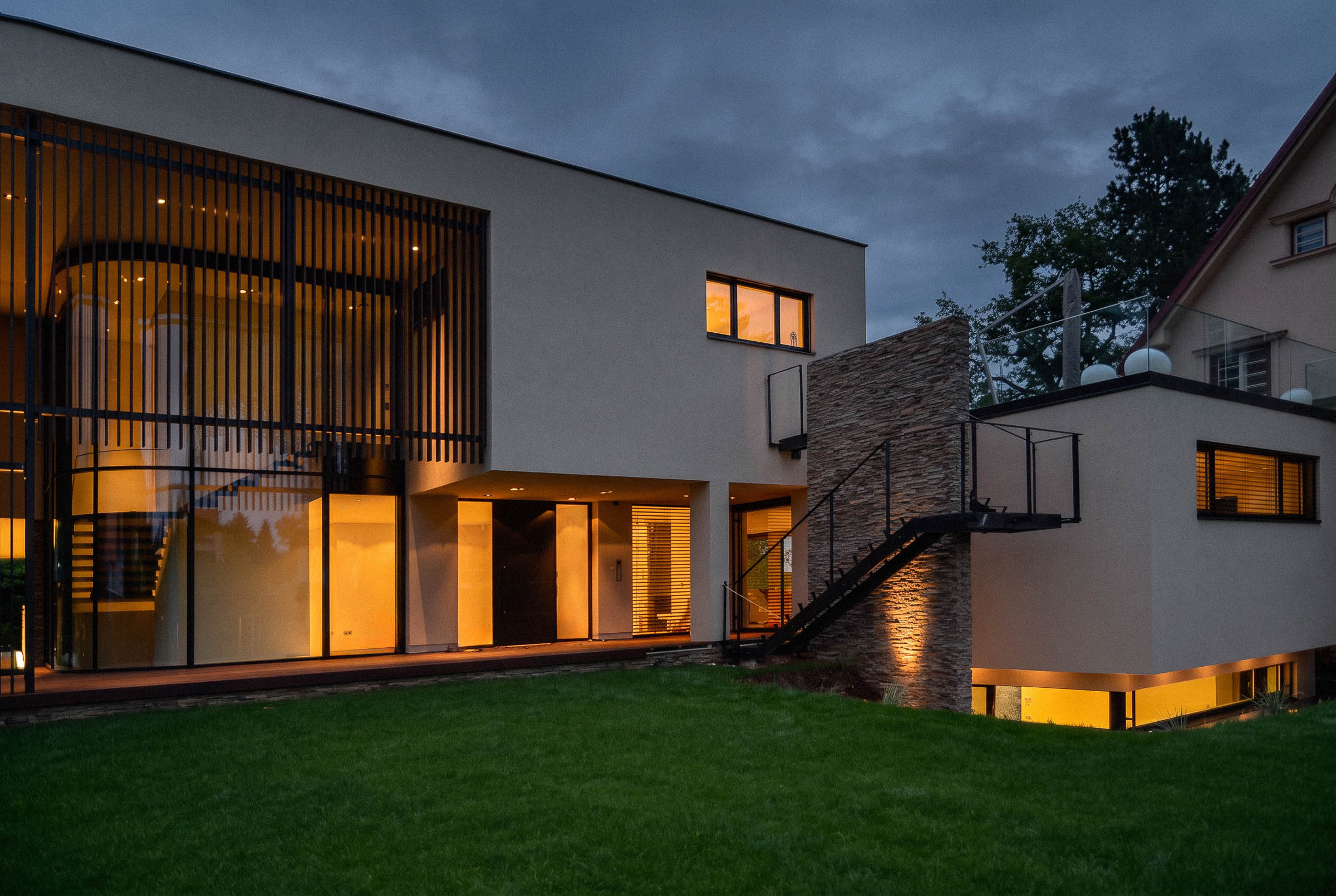
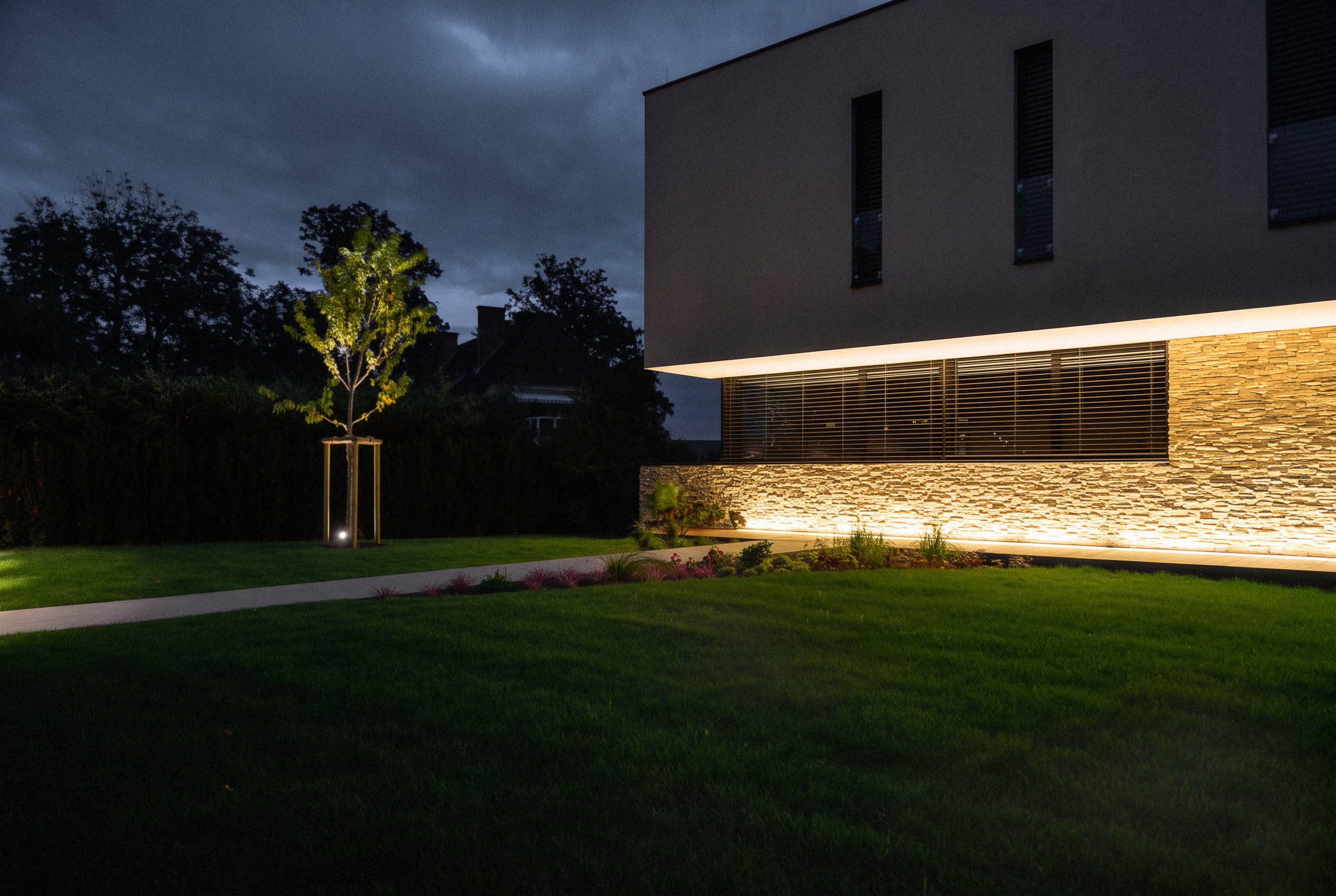
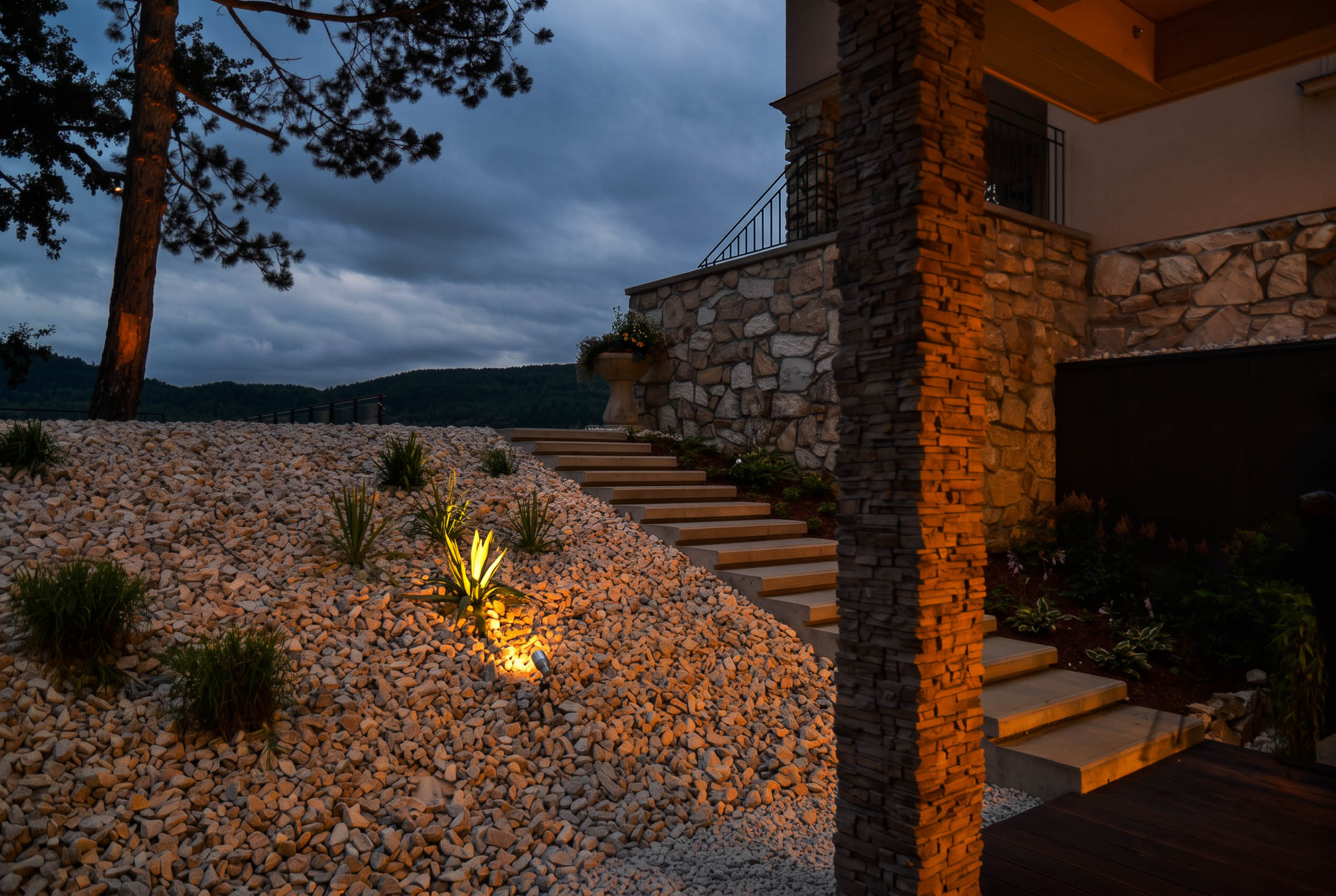
From Villa SP to Lake Wörthersee, the scale of the lighting gradually changes. Close to the architecture, it reveals natural stone surfaces, covered areas and transitions, while with increasing distance from the building, the light becomes progressively more focused on individual elements of the landscape.
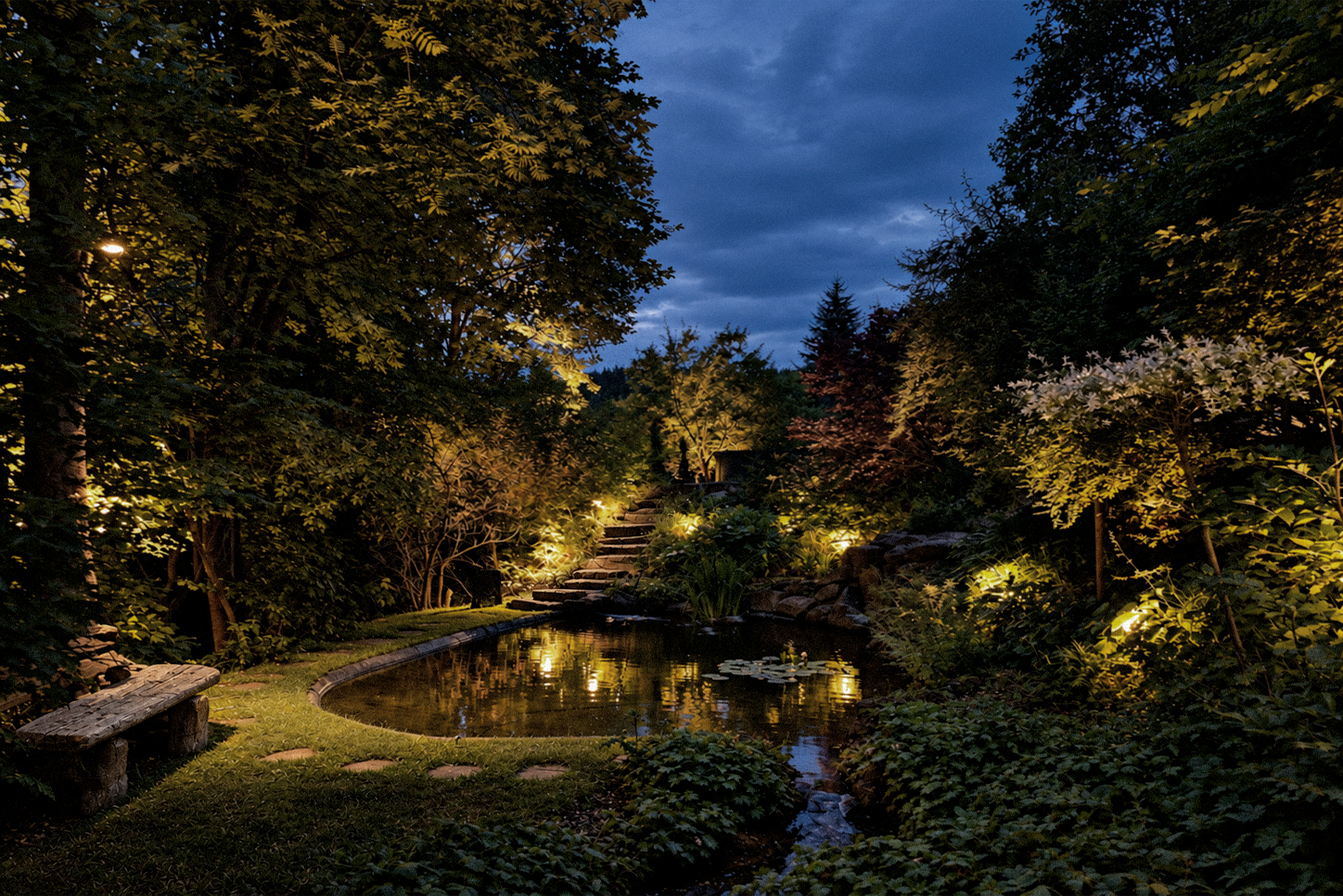
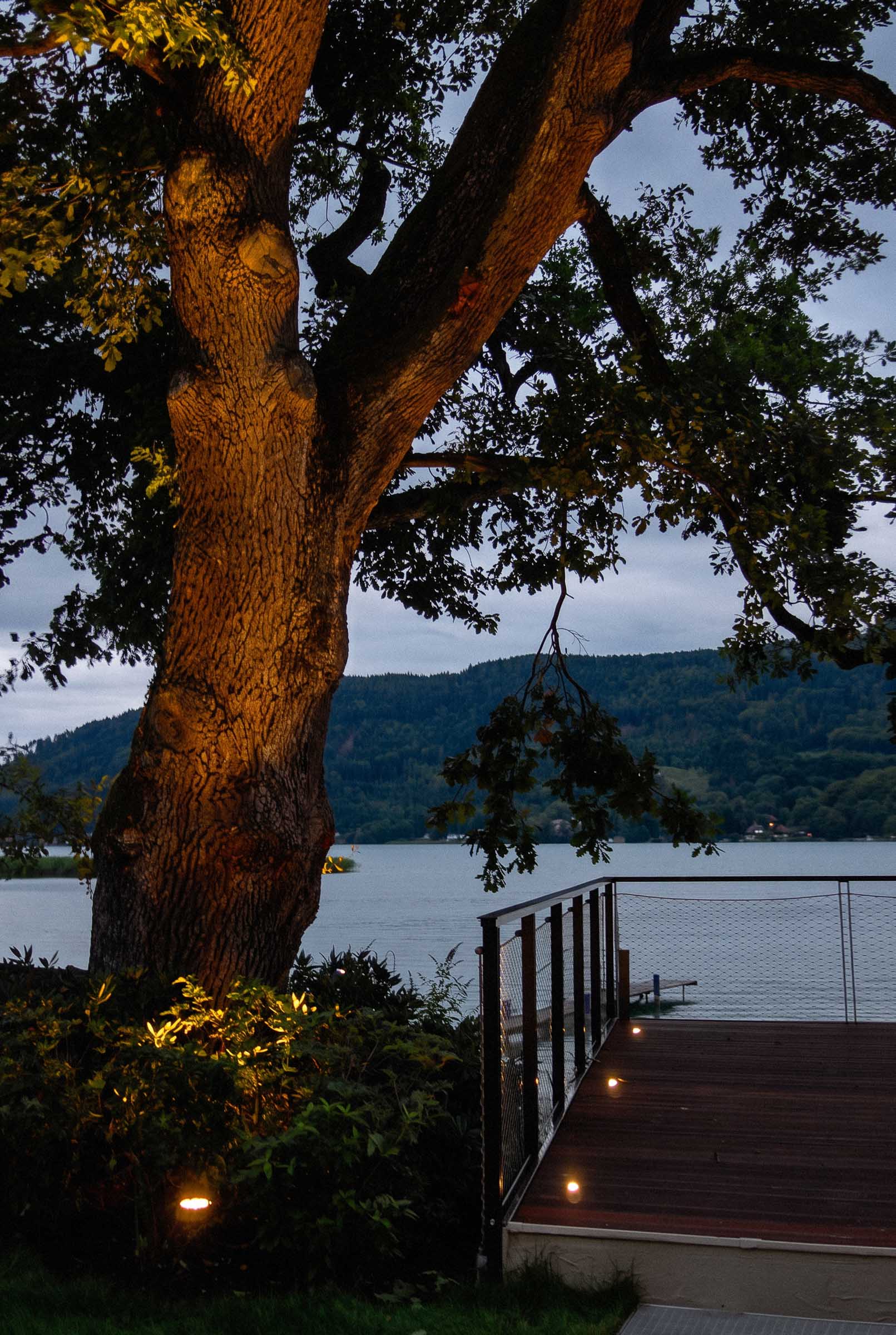
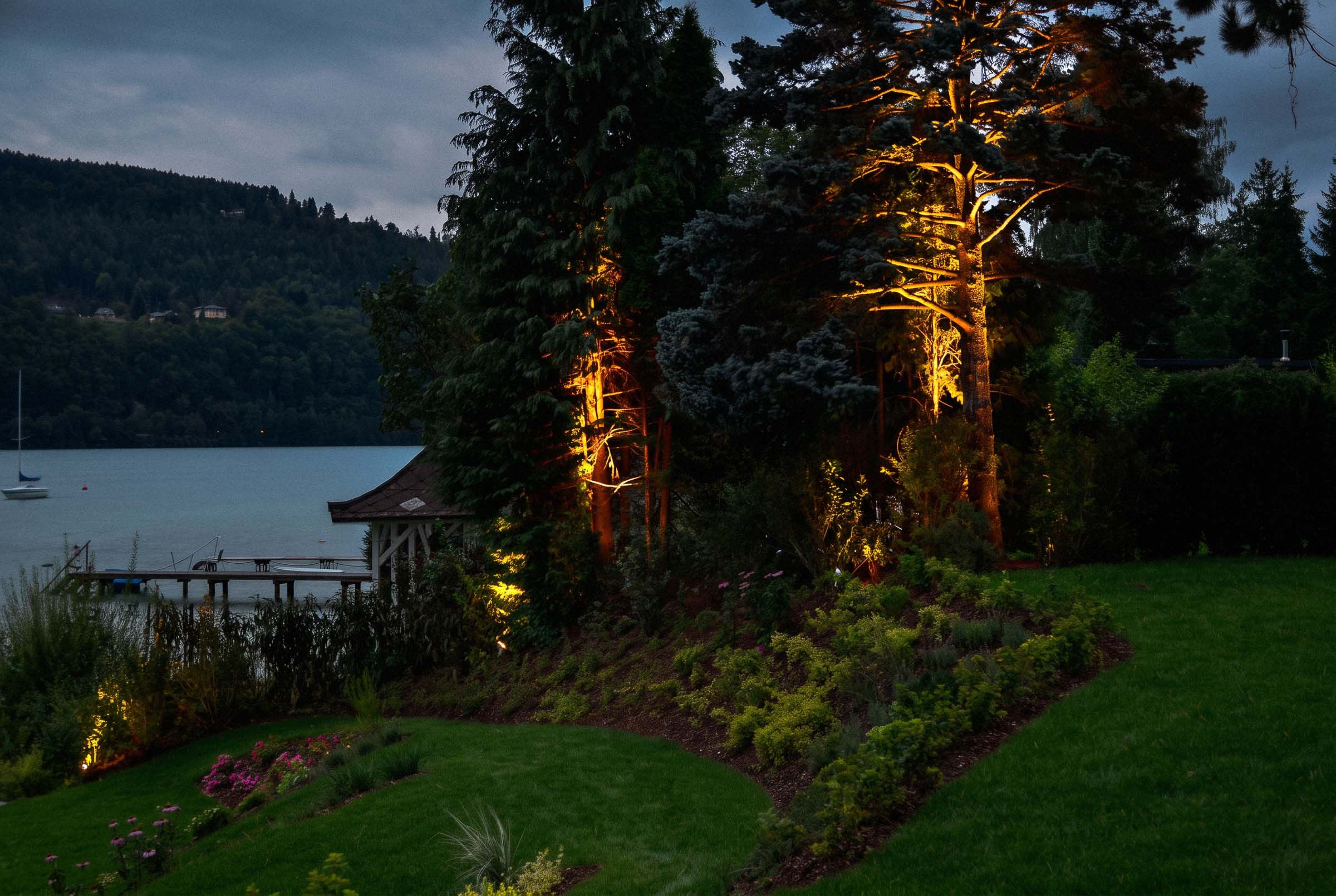
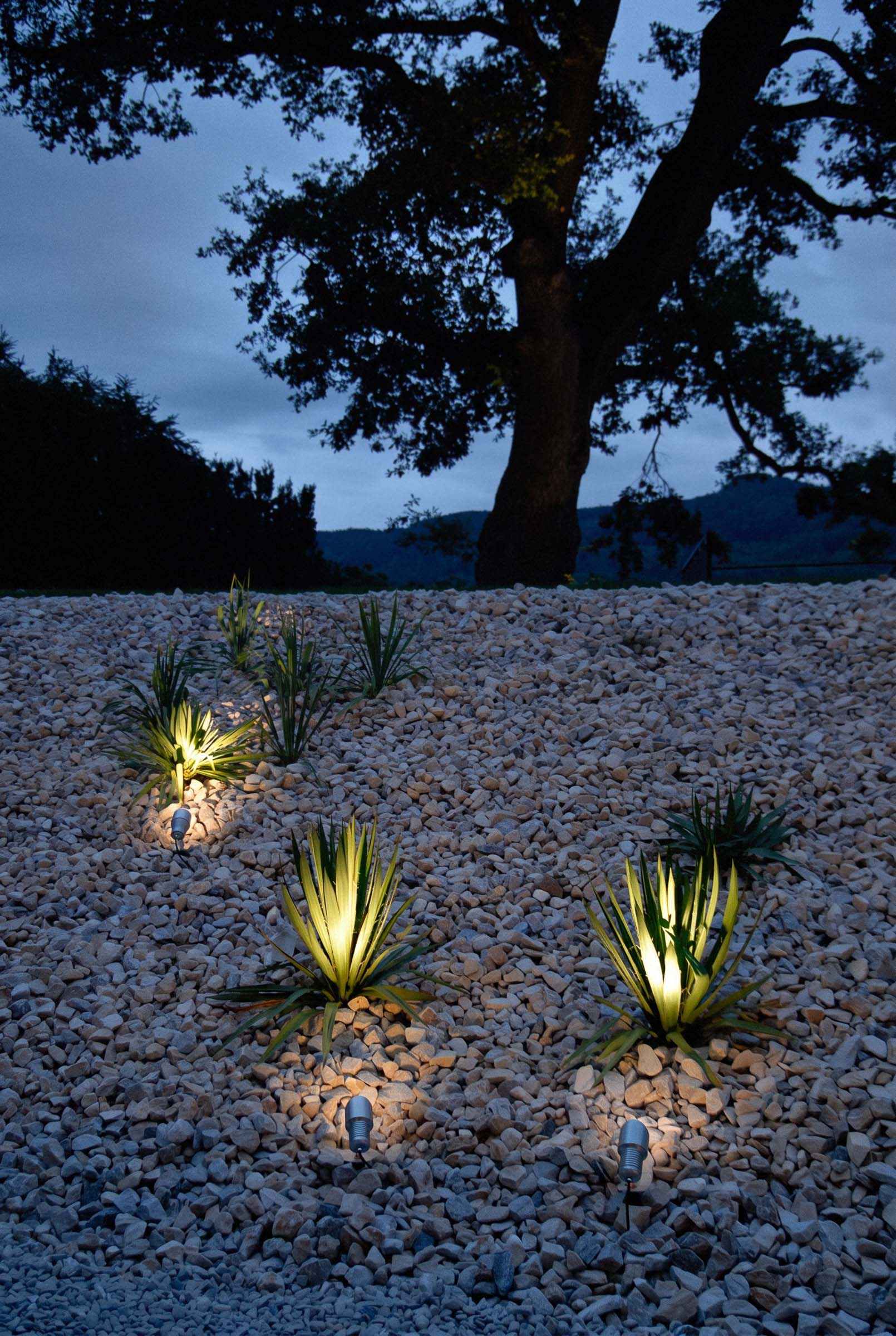
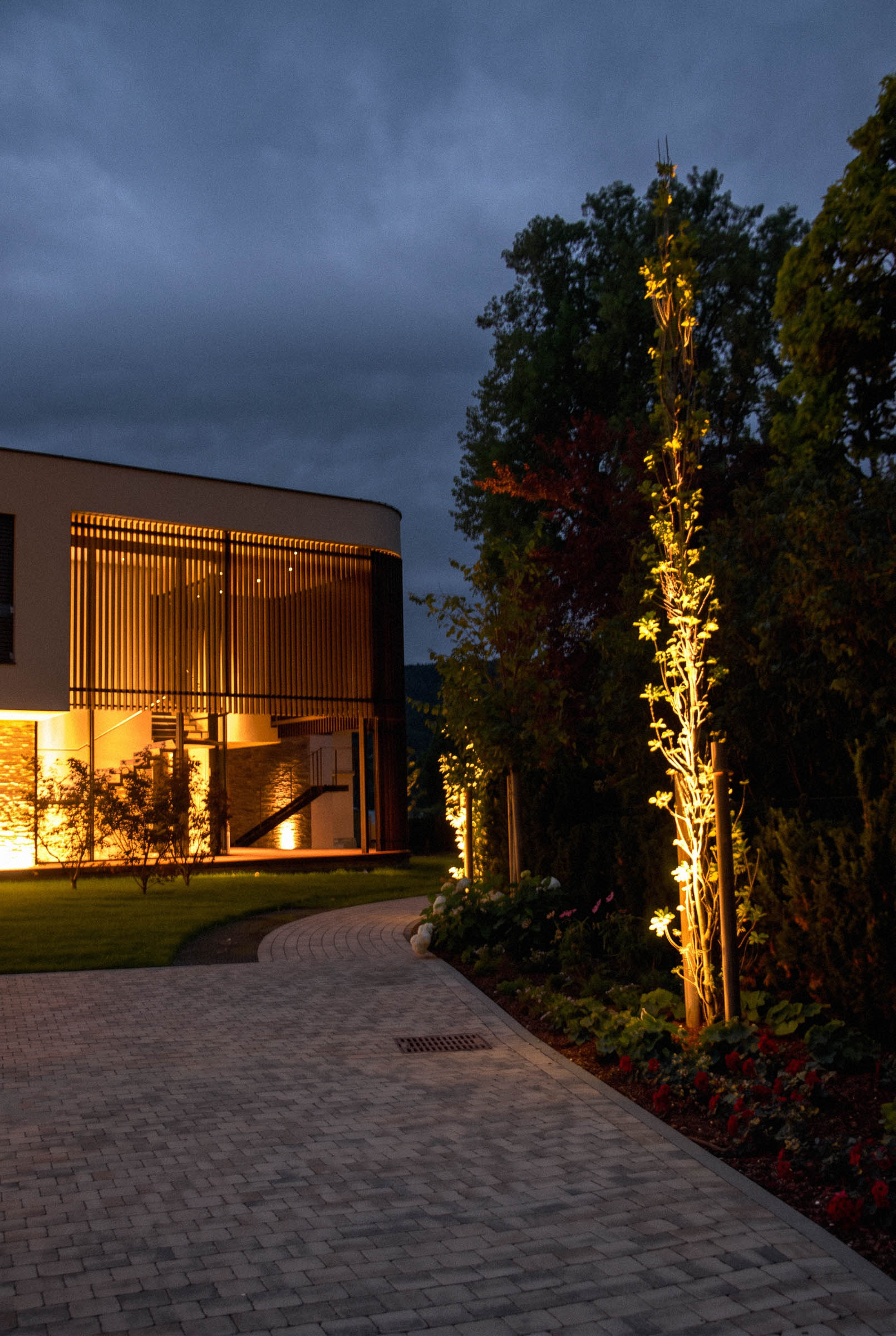
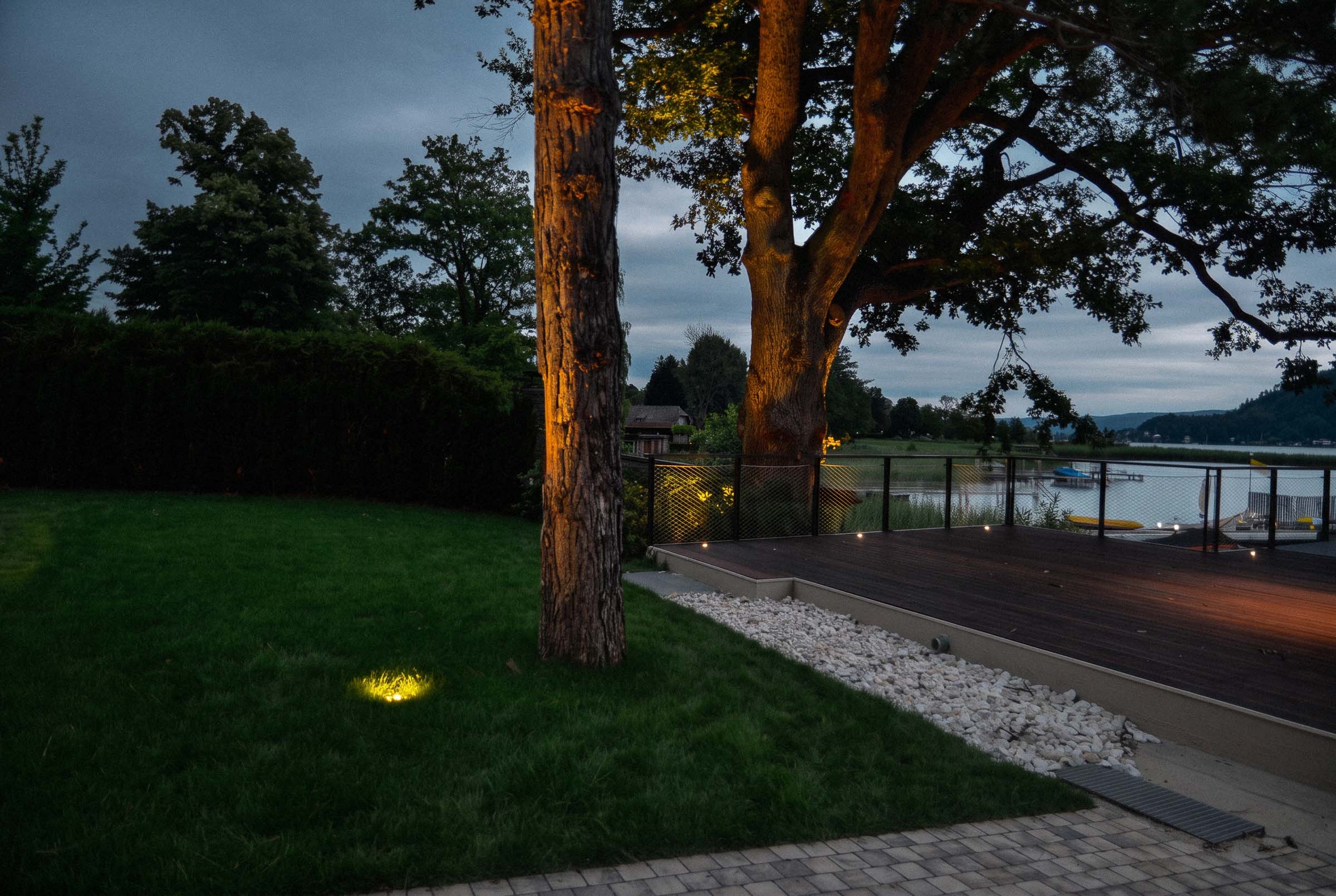
In the garden, illuminated trees and selected planting emerge selectively from the darker surroundings. Large areas in between deliberately remain subdued. Spatial depth is therefore created not through uniform illumination, but through the distances between points of light positioned at different depths within the landscape.
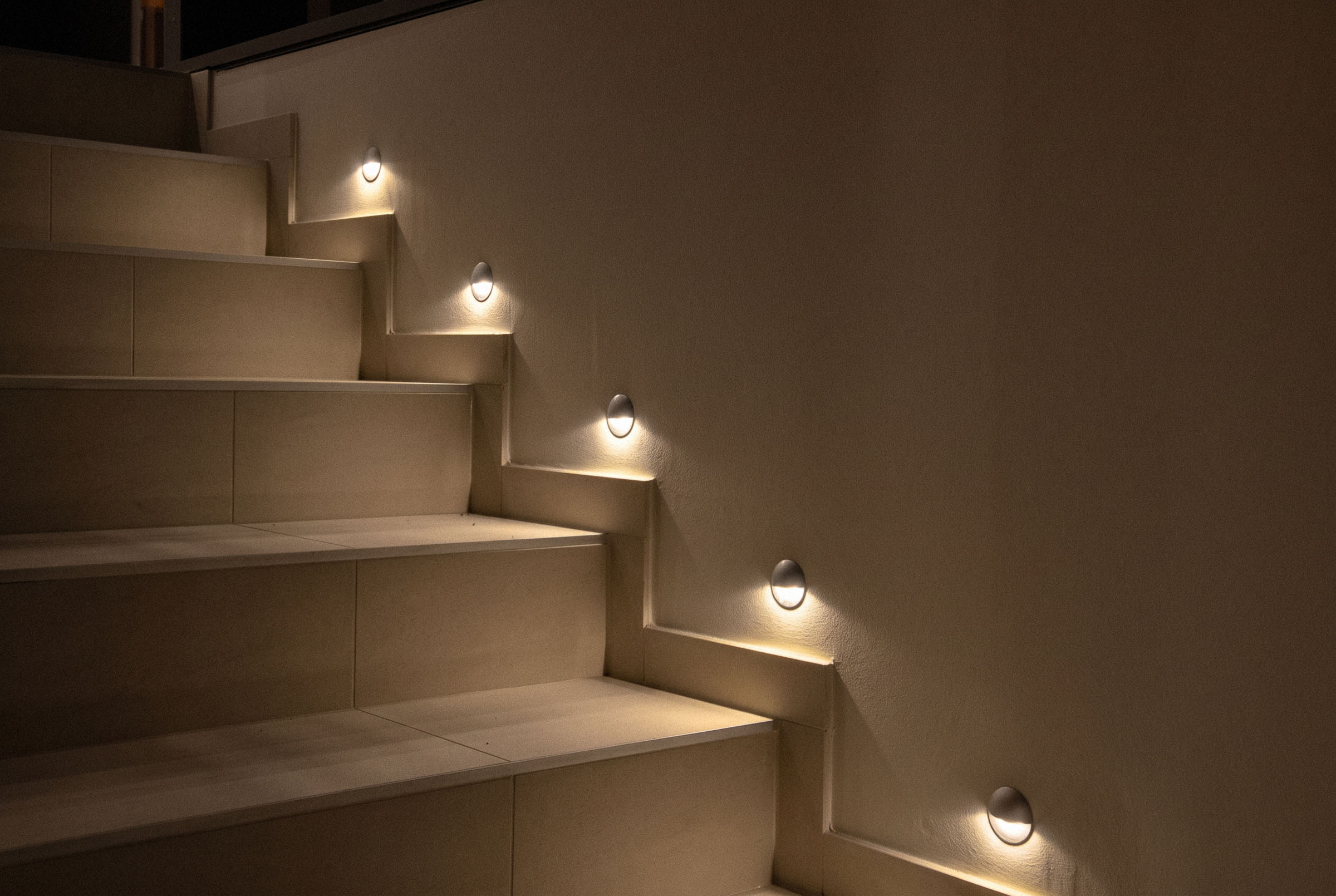
Paths, stairs and walkways are also accompanied by only a few precisely positioned light sources. Their rhythmic sequence makes directions of movement legible and guides perception from the house through the garden towards the shore.
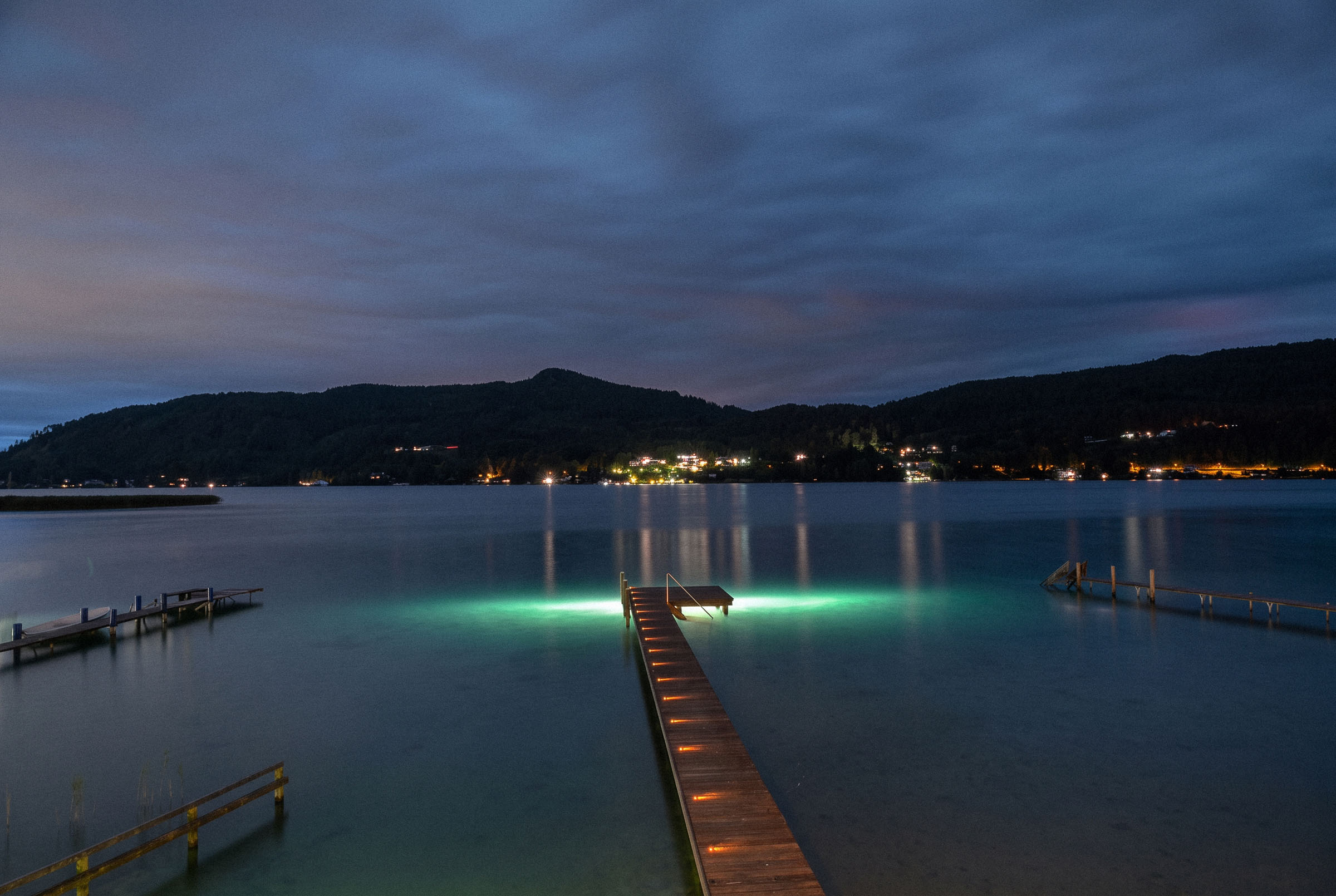
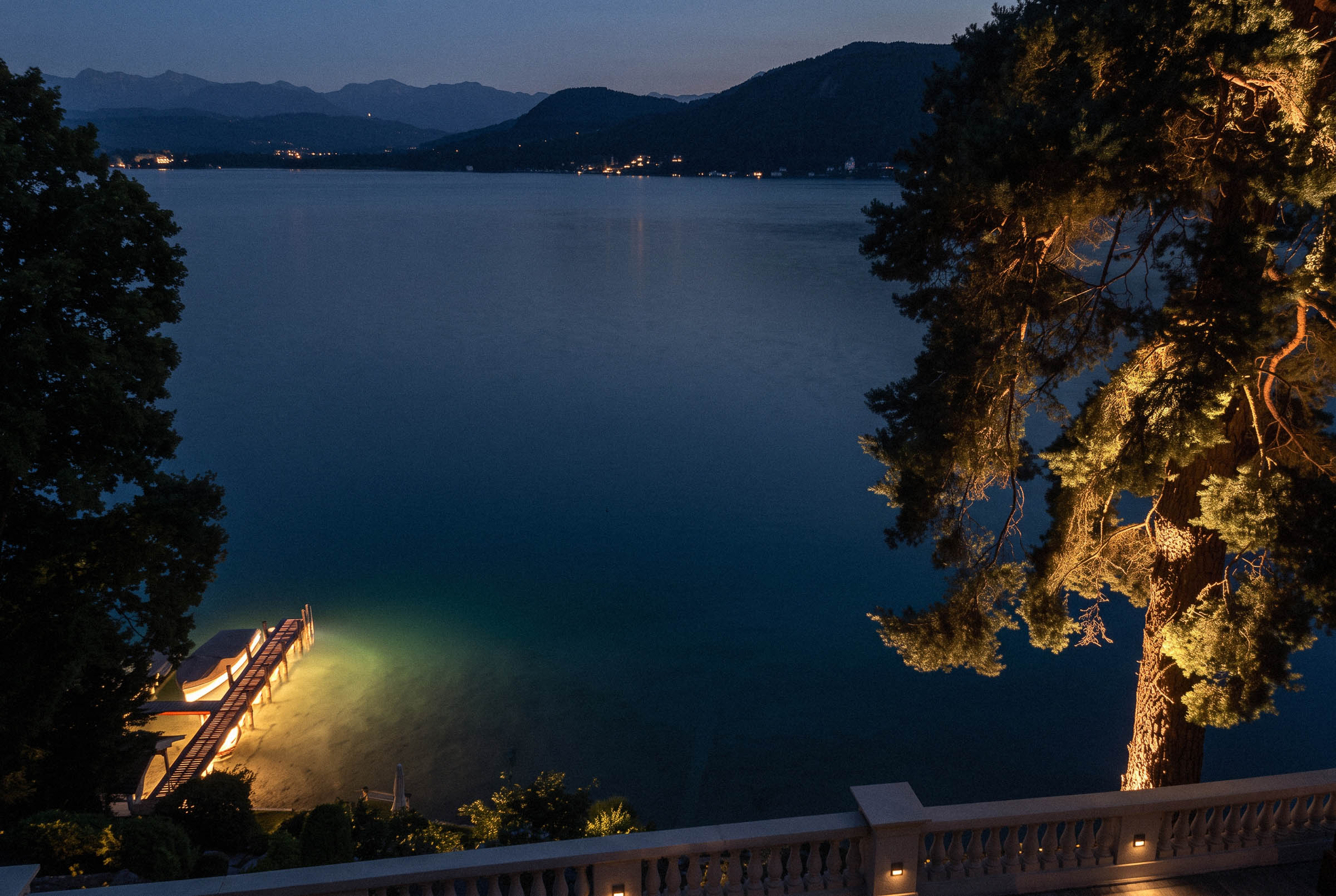
At the water’s edge, this spatial layering continues. The illuminated jetty visually extends the space beyond the boundary of the property and integrates the lake into the nocturnal perception of the site. In this way, the lighting effect gradually transitions from the built architecture into the surrounding landscape.
Project Information
Architecture Type: Villa on Lake Wörthersee with natural stone façades, large glazed surfaces, terraces and covered outdoor areas, as well as an extensive garden, shoreline and jetty.
Lighting Concept & Design Approach: The lighting design gradually changes in scale and density with increasing distance from the building. Architecture and natural stone surfaces are perceived more continuously close to the house, while within the garden the lighting becomes concentrated on selected trees, planting, paths and transitions, before being reduced to a few precisely positioned points of light at the shoreline.
Luminaire Integration: A combination of architecture-related lighting on façades and covered areas, small orientation lights along paths, stairs and walkways, and directed lighting accents on selected trees and planting. At the water’s edge, a limited number of integrated points of light accompany the jetty and extend spatial perception beyond the shoreline.
Spatial Effect: Points of light positioned at different distances from the building create layers of depth extending from the villa through the garden and vegetation to the lake. Large darker areas remain as connecting spaces in between, while illuminated trees, paths and the jetty make spatial distances and directions of movement perceptible.
Questions About Lighting Design for Lakeside Villas and Properties
- How does exterior lighting change with increasing distance from a residential building?
Close to the building, light can respond more directly to the architecture, materials and immediately adjacent outdoor living areas. At Villa SP, the lighting becomes increasingly selective with greater distance: more continuous lighting effects around the architecture transition into individual accents on vegetation, paths, the shoreline and jetty.
- How can light reveal the spatial depth of a large property at night?
The entire site does not need to be illuminated. By highlighting individual trees, planting or architectural elements at different distances, several perceptible spatial layers are created, allowing the dimensions of the property to remain legible even in darkness.
- How can paths, stairs and walkways be illuminated without extensively brightening their surroundings?
Small, rhythmically positioned points of light can mark directions of movement and changes in level without creating a continuously illuminated surface. At Villa SP, these lighting elements accompany the route through the property and continue onto the jetty.
- How can a large garden be illuminated without losing the character of the nocturnal landscape?
Instead of illuminating vegetation and lawns uniformly, selected trees and planting can be highlighted as individual spatial reference points. Darker areas in between preserve the natural character of the landscape at night while simultaneously reinforcing the perceived distance between the illuminated elements.
- What role can an illuminated jetty play in the spatial perception of a lakeside property?
A jetty can extend the direction of movement and view beyond the shoreline. At Villa SP, a limited number of points of light guide perception towards the lake, making the water part of the nocturnal spatial composition.
- How do architectural and vegetation lighting differ within a shared lighting concept?
Architectural surfaces can be revealed through light in terms of their materiality and horizontal extent, while vegetation is more strongly perceived through individual vertical accents. At Villa SP, these different principles create a gradual transition from the built architecture to the increasingly selectively illuminated landscape.