Boutique-Hotel Amauris
Vienna |Hotel, Exterior
Project Description
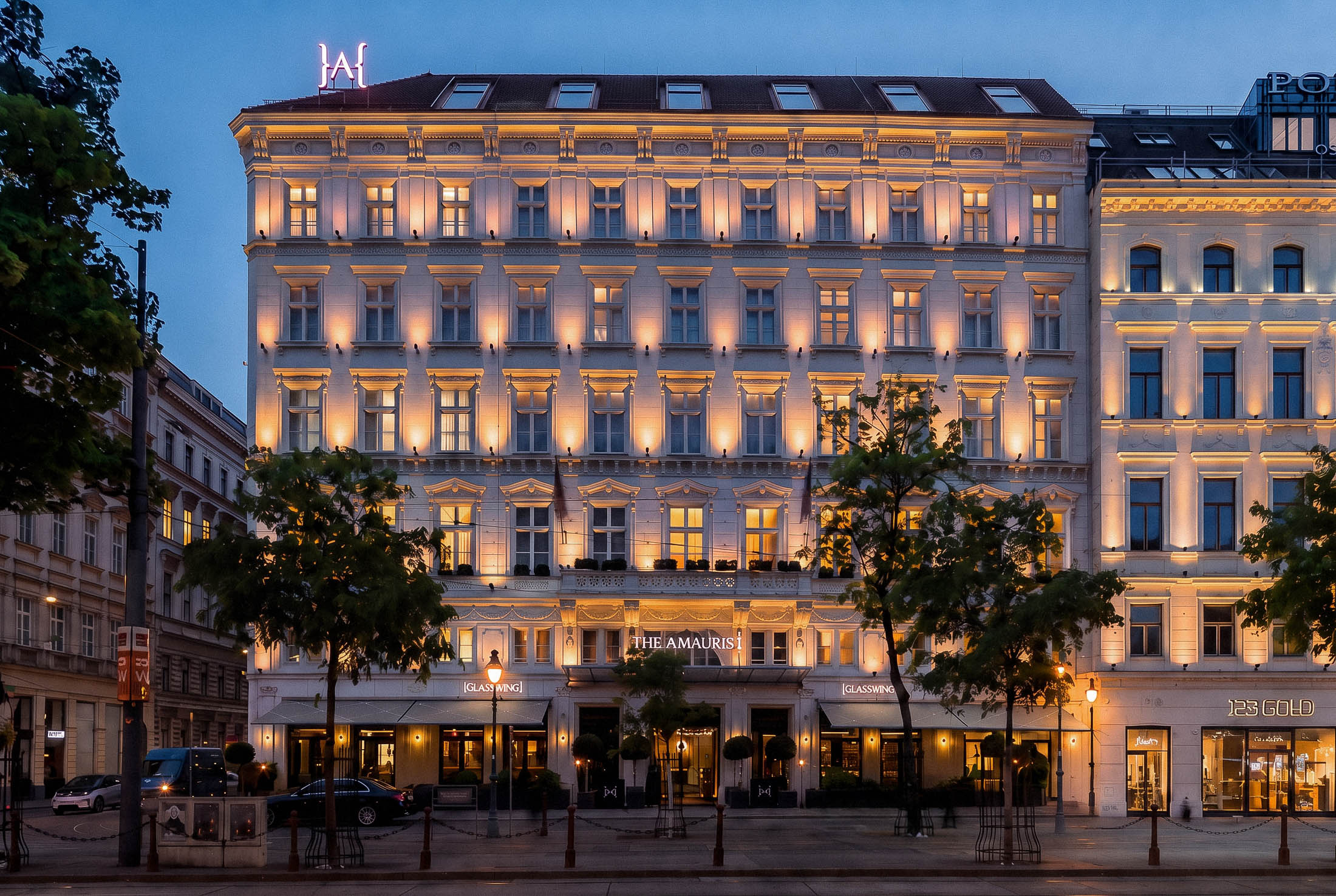
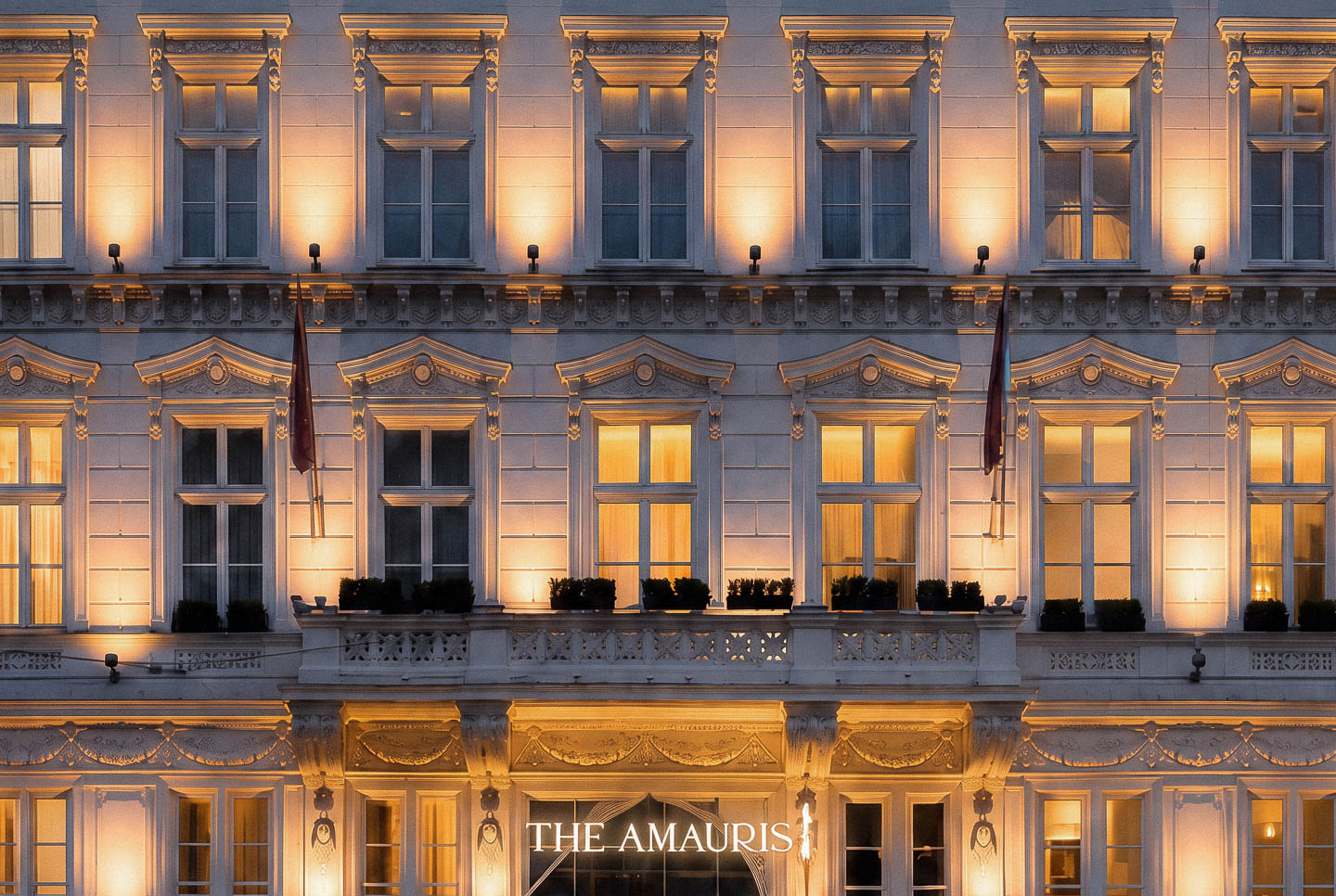
Within the city at night, the Boutique Hotel Amauris gains a clearly recognisable presence through light. The lighting follows the articulation of the historic façade while concentrating on those areas that identify the building as a hotel and a distinct address within the streetscape.
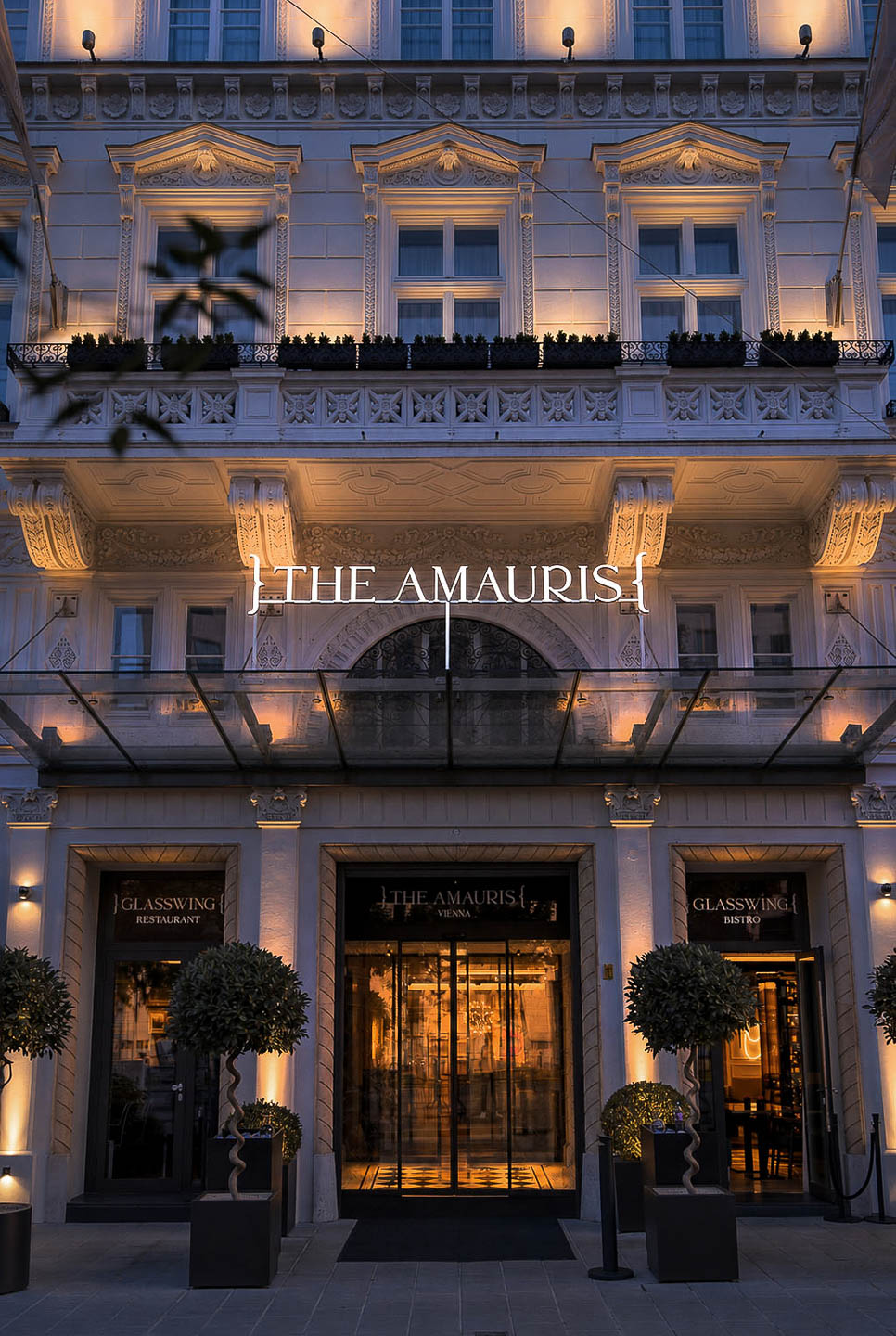
Vertical elements and window axes are selectively emphasised, while the lighting effect becomes more concentrated around the representative entrance. This creates a clear hierarchy within the multi-storey façade, making the entrance visible without illuminating the entire building envelope uniformly.
The light sources themselves recede behind their effect. Historic details remain legible, while graduated brightness levels hold the façade structure together and give the entrance greater visual priority.
The façade lighting therefore supports not only the architecture, but also the hotel’s identity as an address. After dark, the Amauris remains perceptible as a distinct place within its urban setting and acquires a striking yet restrained nocturnal identity.
Project Information
Architecture Type: Historic, multi-storey hotel architecture with a classically articulated street facade and representative entrance area.
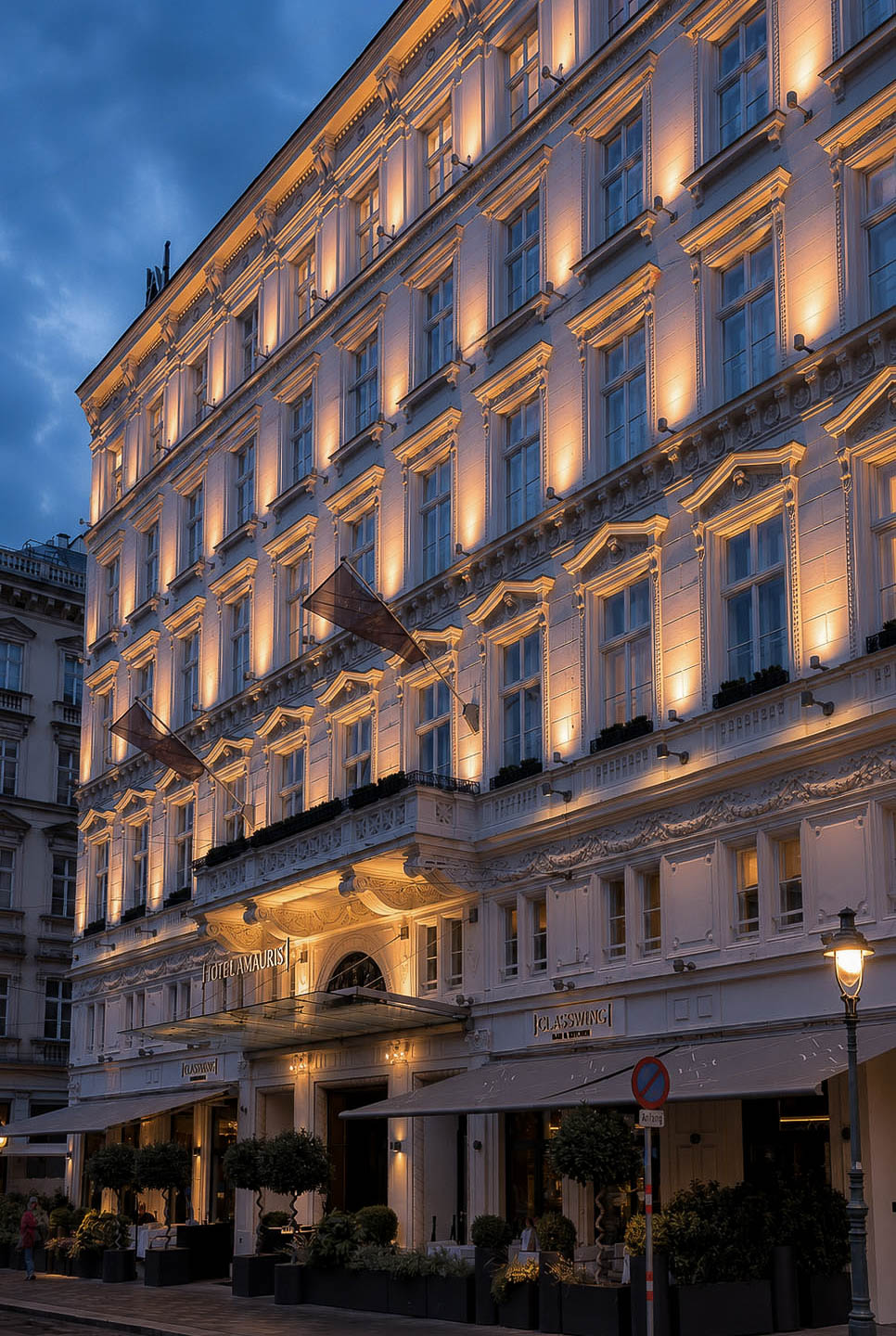
Lighting Concept & Design Approach: The façade lighting follows the existing architecture and combines its nocturnal legibility with a deliberate emphasis on the hotel as an address. Window axes and vertical structures are taken up by the lighting, while the entrance is given greater visual weight as the central point of reference.
Luminaire Integration: Discreetly positioned light sources with targeted light distribution onto facade elements and the entrance area, allowing the technology to recede visually behind the illuminated architecture.
Spatial Effect: A distinctive, controlled exterior appearance with a clearly recognisable entrance and a historic facade that makes the hotel visible as a distinct address within the city after dark.
Questions about hotel facade lighting
- What role does facade lighting play in establishing a hotel as a recognisable address?
Light can help make a hotel clearly identifiable within the streetscape after dark. At this hotel, the entrance in particular receives greater visual emphasis and thereby supports recognition of the address.
- How can a hotel entrance be highlighted through light?
The entrance area can be given deliberately greater emphasis within the facade lighting. This creates a visual focal point that clearly distinguishes the access point from the remaining facade.
- How can a historic hotel facade be illuminated without visually overpowering it?
The lighting should follow existing window axes, vertical elements and architectural details. At this hotel, the illumination therefore responds to the existing order rather than imposing a new lighting structure on it.
- Why should a hotel facade not be illuminated to the same brightness throughout?
Different brightness levels create a hierarchy between the entrance, facade structure and other parts of the building. Uniform illumination would reduce this differentiation.
- How can a boutique hotel develop a distinctive identity at night?
Facade lighting tailored to the architecture and entrance can keep characteristic features visible while strengthening the building’s presence within its urban context.
- How can luminaires visually recede in historic facade lighting?
Light sources are positioned and aimed so that their effect on the architecture is perceived above all. The facade itself therefore remains the focus.