City Park
Althofen |Exterior, Public
Project Description
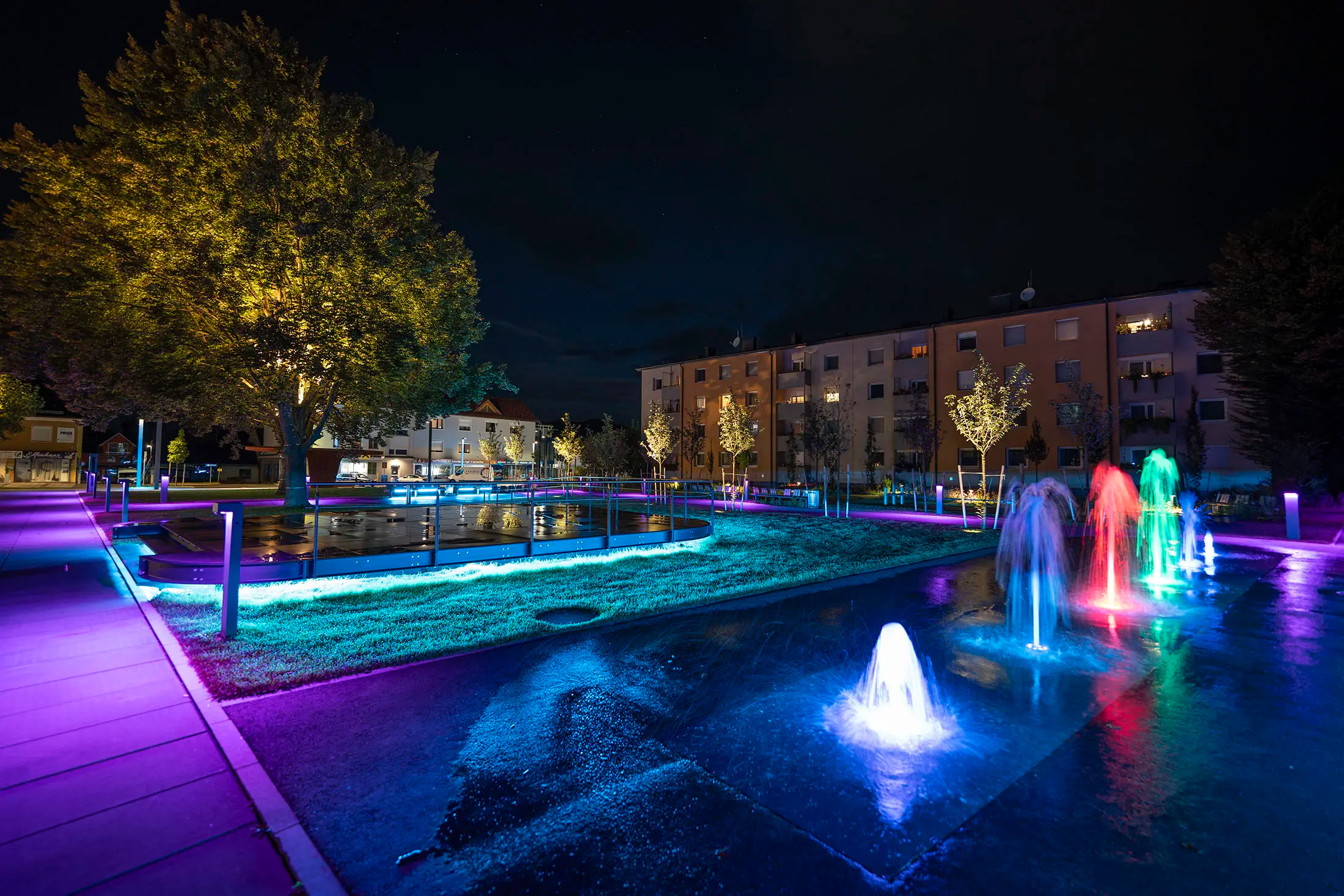
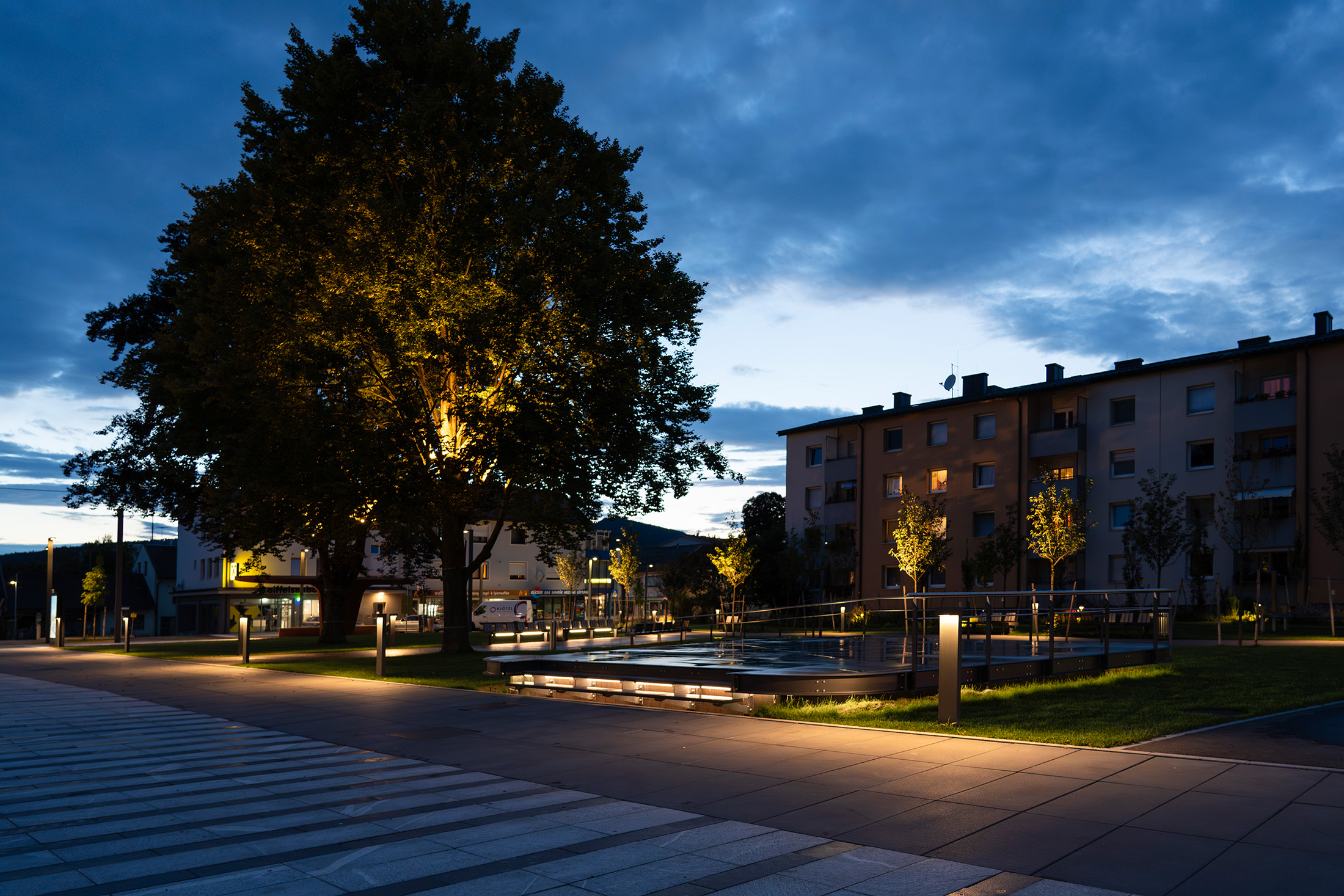
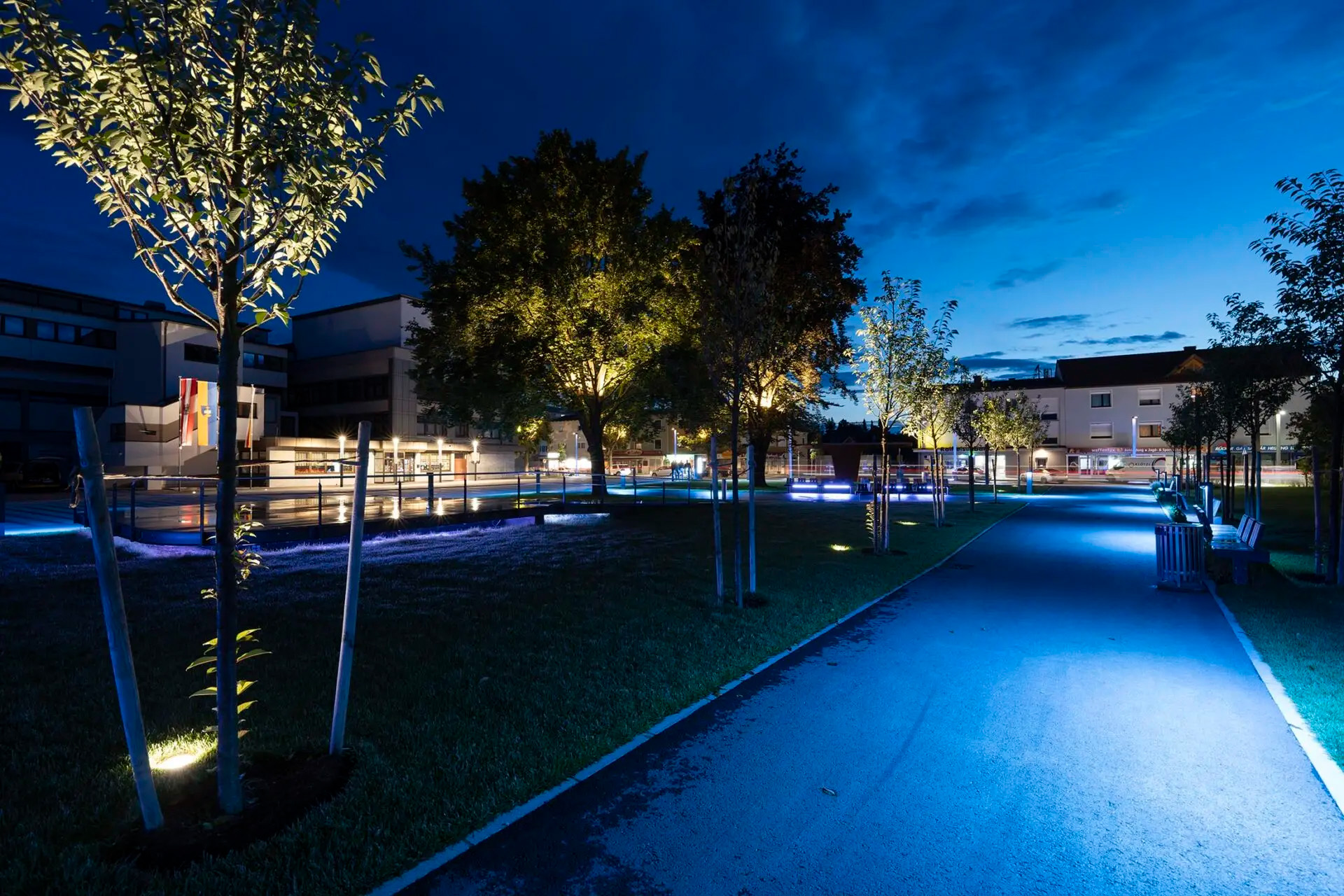
At Stadtpark Althofen, lighting transforms the spatial hierarchy of the public landscape. Pathways, groups of trees, seating areas and the water feature remain part of the same setting, yet take on different levels of prominence after dark, creating a new relationship between movement, gathering and orientation.
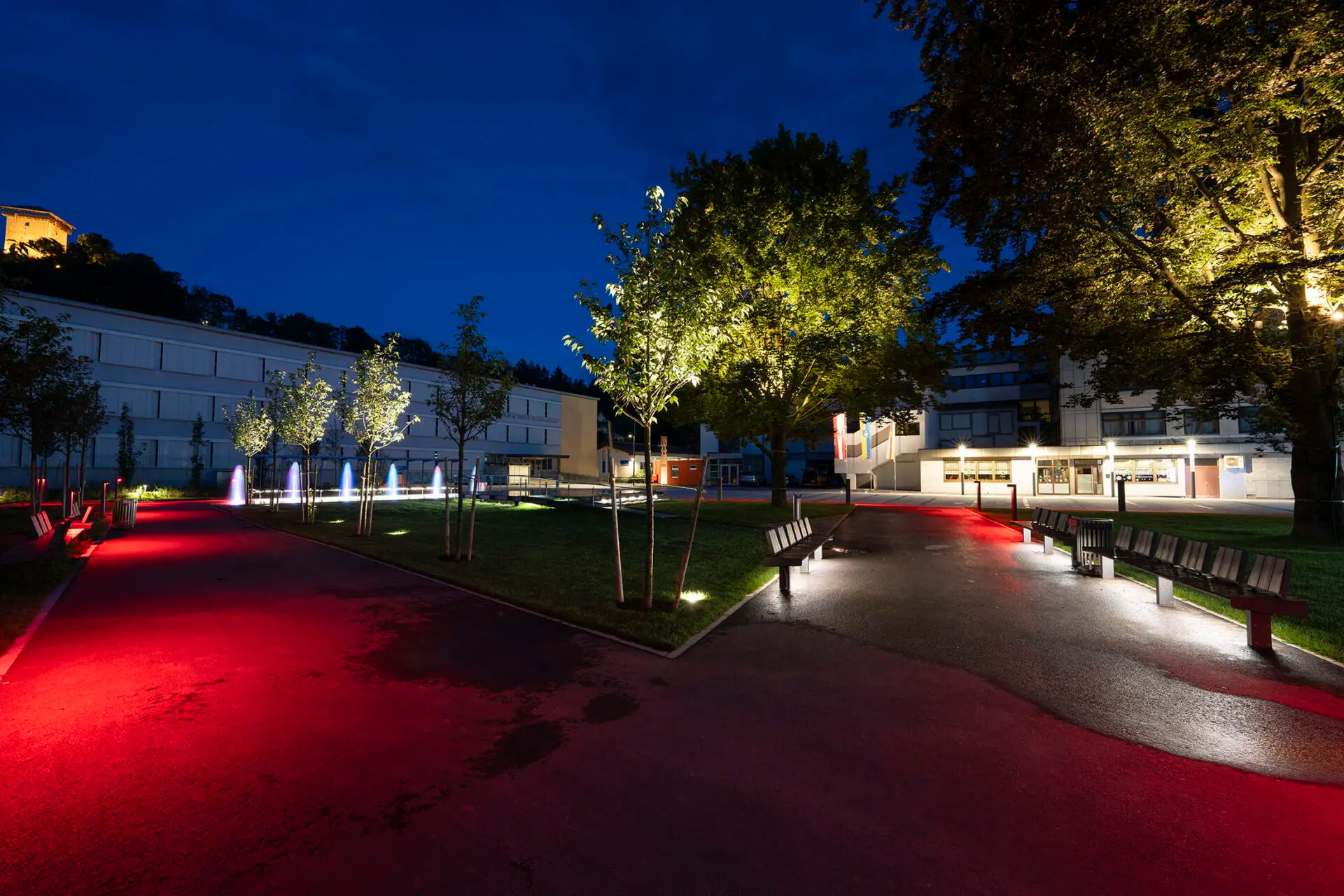
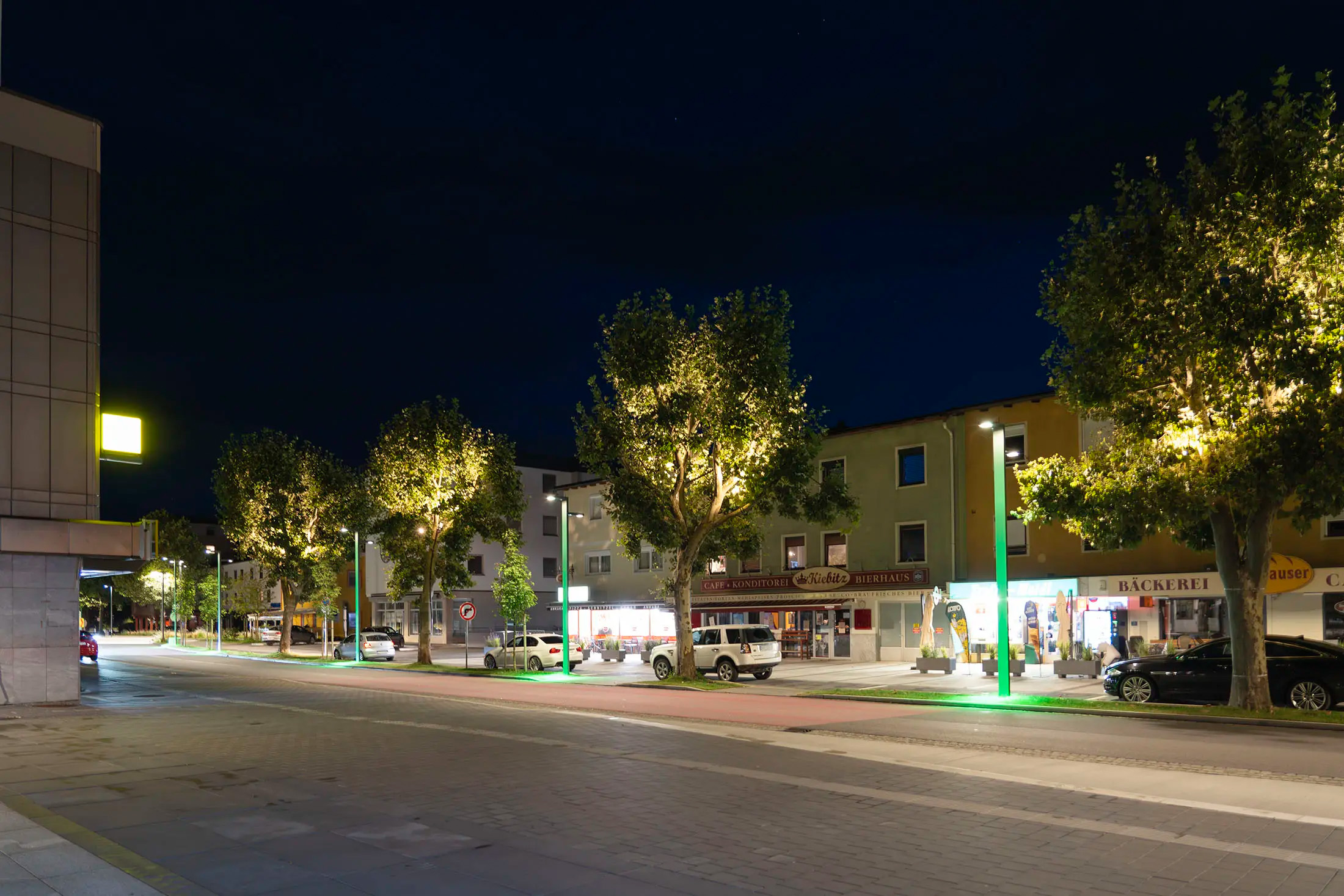
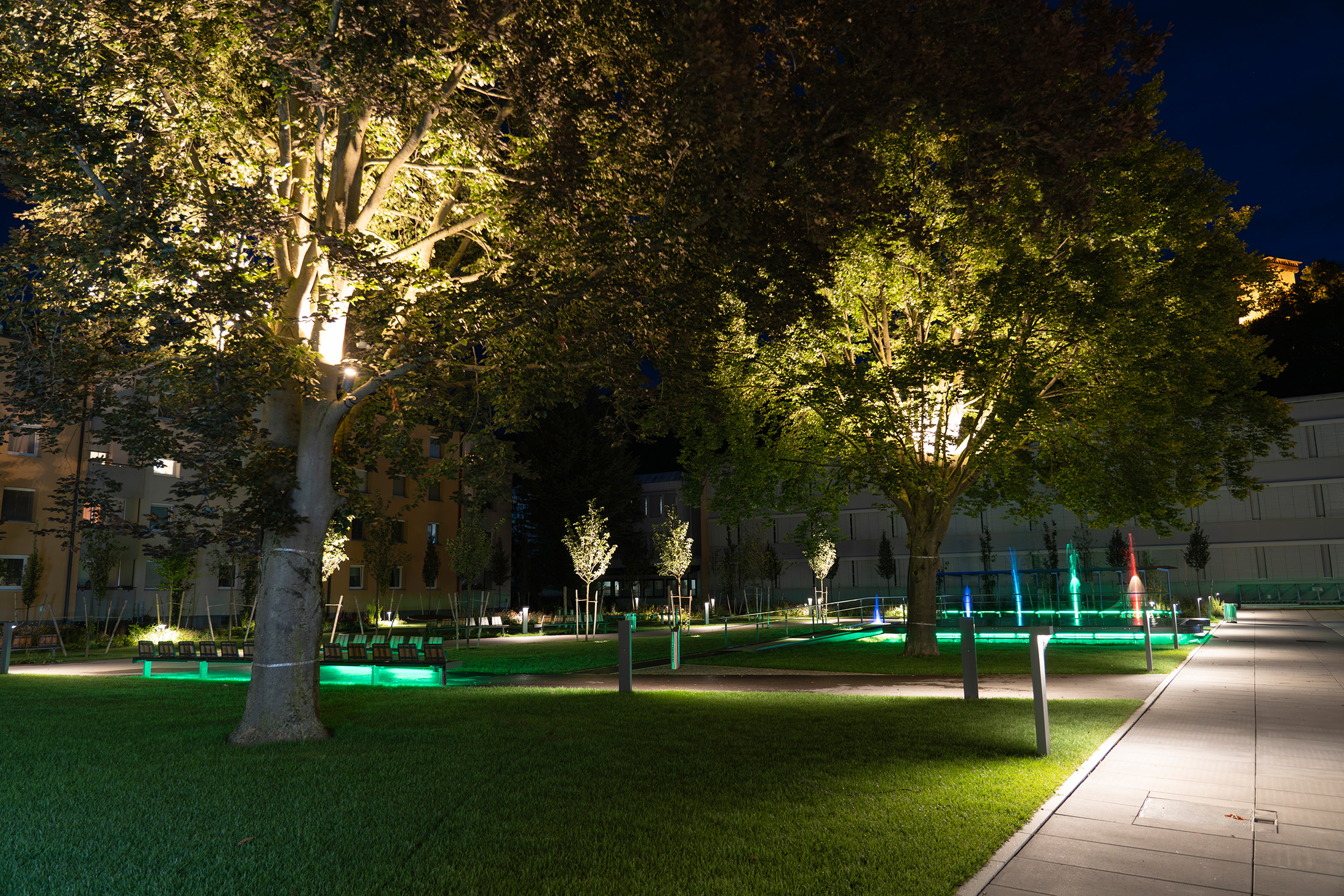
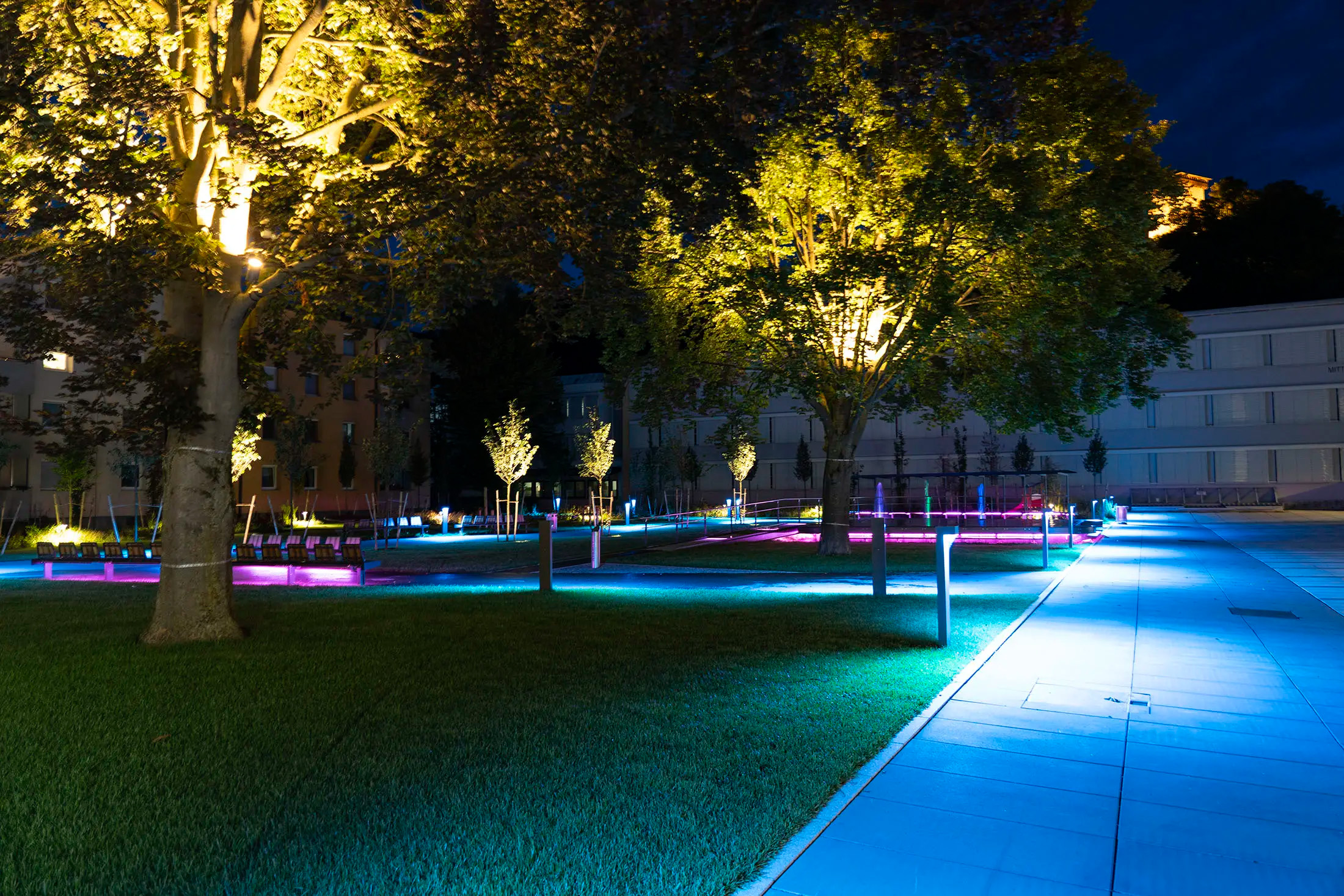
Warmly illuminated trees form the park’s vertical framework. Their trunks and canopies stand out in three dimensions against darker spaces between them, while coloured lighting across pathways and paved areas creates a broader, more continuous effect, visually connecting the main routes through the park.
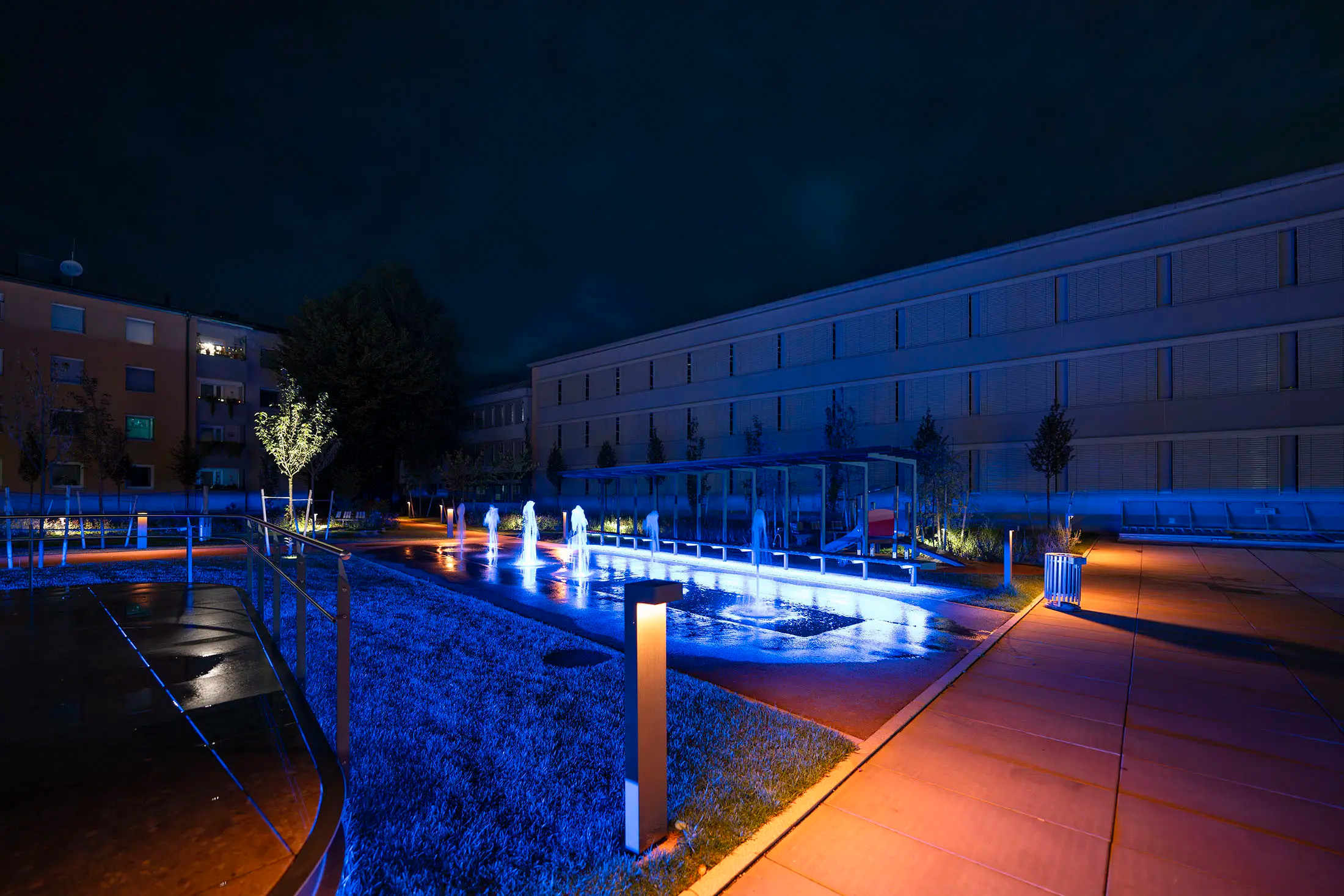
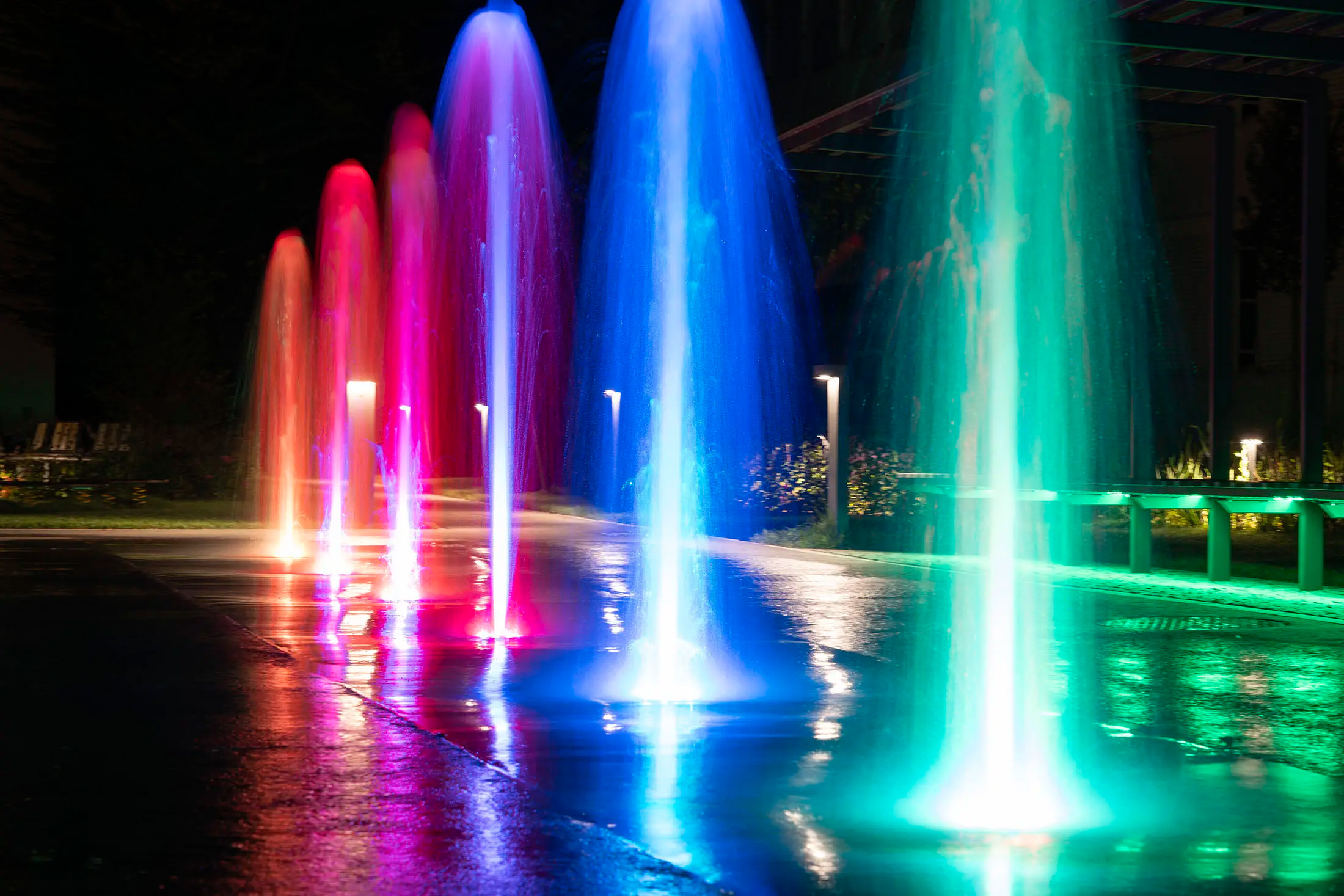
The water feature introduces another layer. Illuminated fountains become dynamic forms of light, their colours reflected across wet surfaces and extending their visual presence beyond the water itself. Water thus becomes the most dynamic element of the park’s nocturnal landscape.
The interplay of vegetation, pathways, water and functional lighting creates a layered lighting composition. Colour is not used merely for decorative effect, but adds a distinct atmospheric dimension to the orientation and spatial organisation of the public realm.
Project Information
Architecture Type: Public urban park in Althofen, Carinthia, featuring mature trees with large canopies, park pathways, paved public spaces, seating areas, a central water feature and connections to the surrounding streets.
Lighting Concept & Design Approach: The lighting design combines functional orientation with a differentiated nocturnal landscape. Warmly illuminated trees provide vertical reference points, while coloured lighting highlights pathways and paved areas, making continuous routes through the park clearly visible. The illuminated water feature adds a dynamic layer of colour, movement and reflection to this spatial composition.
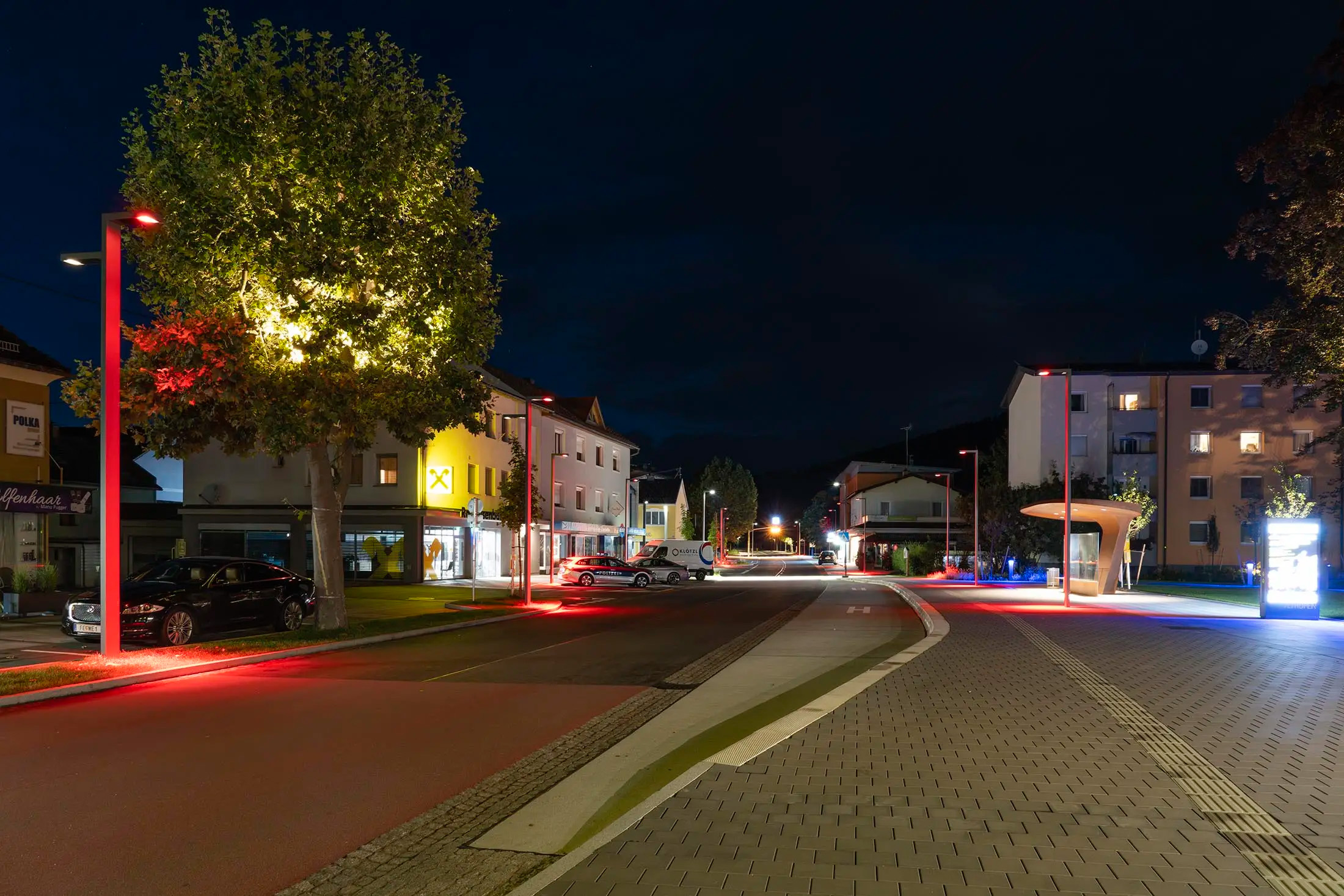
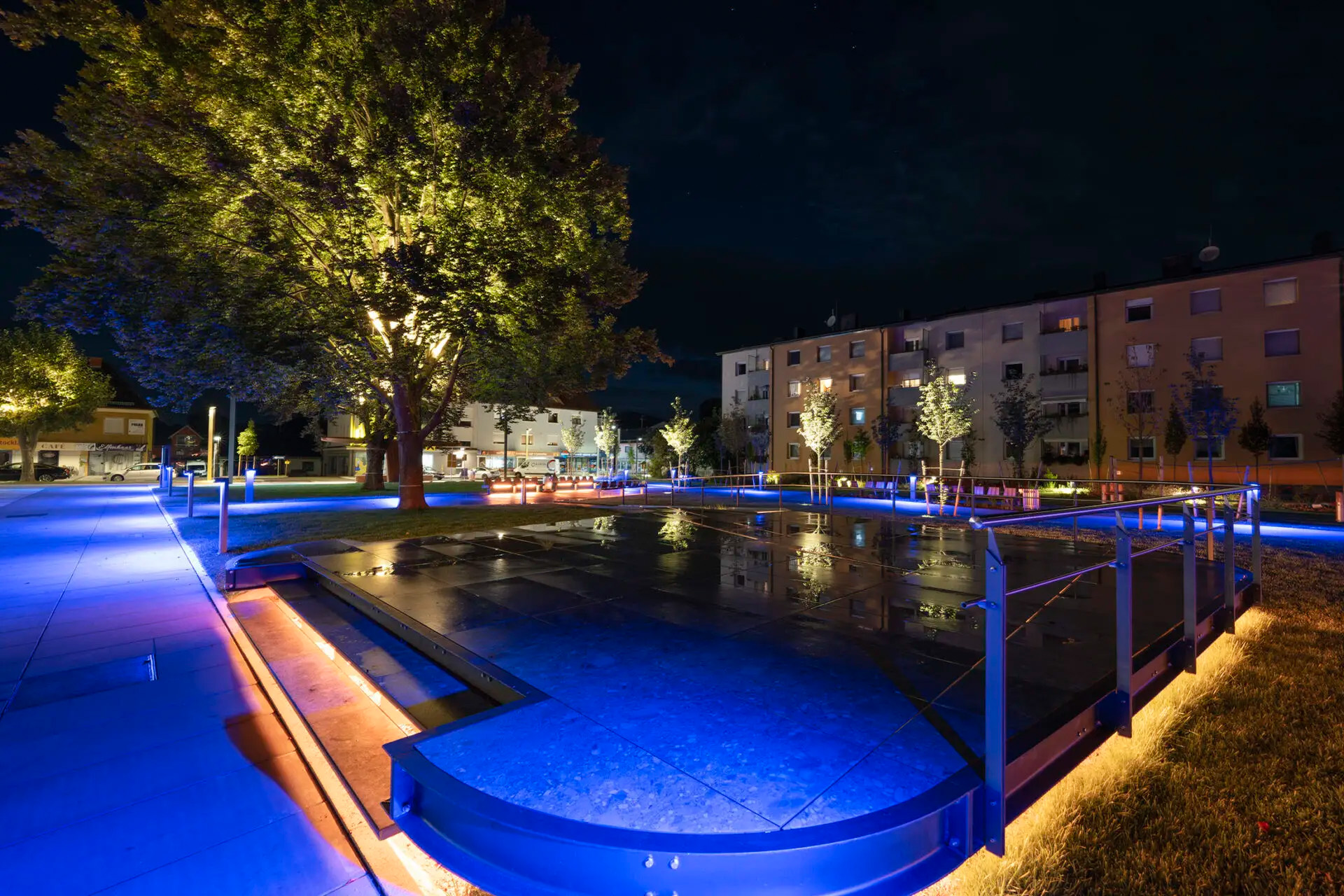
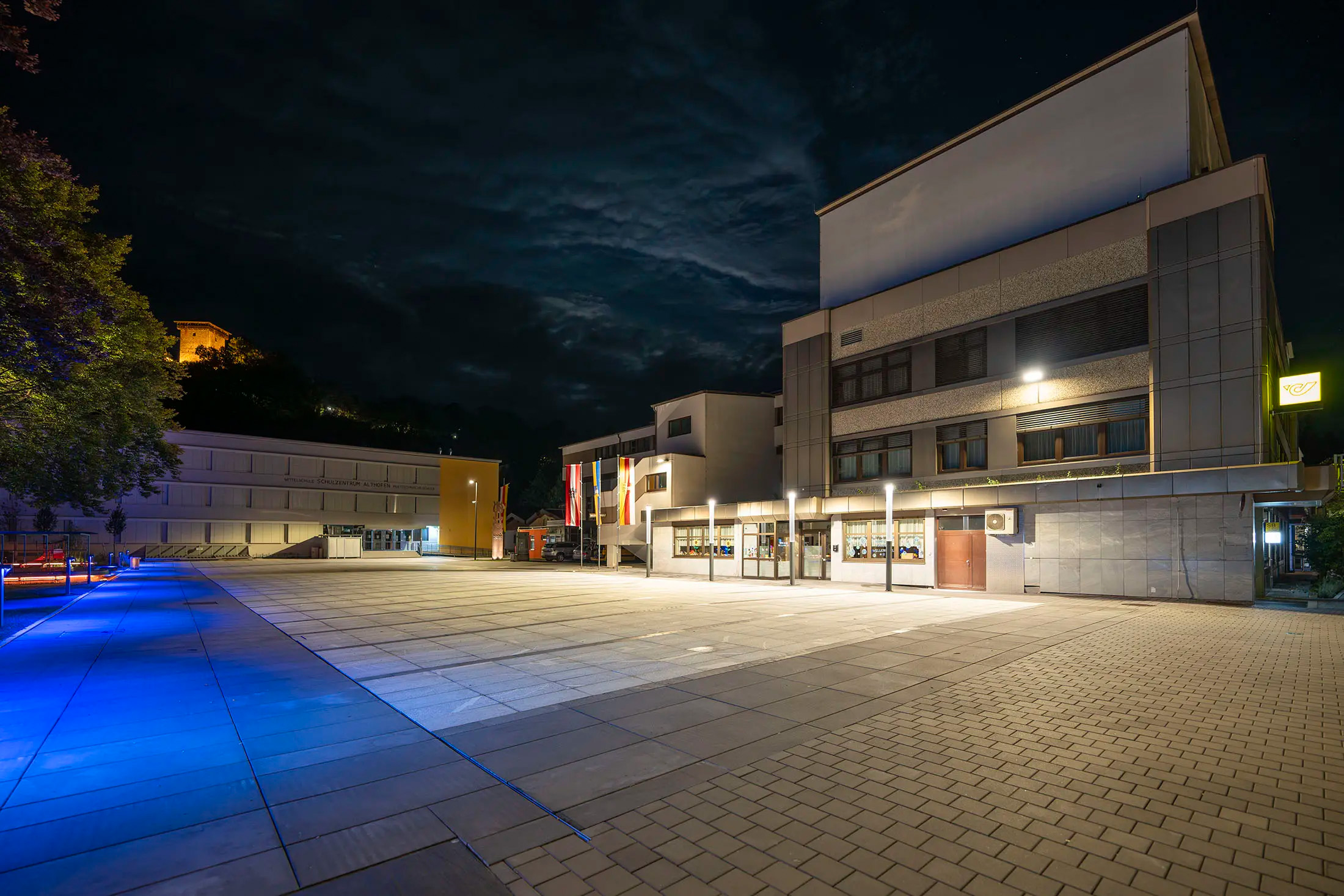
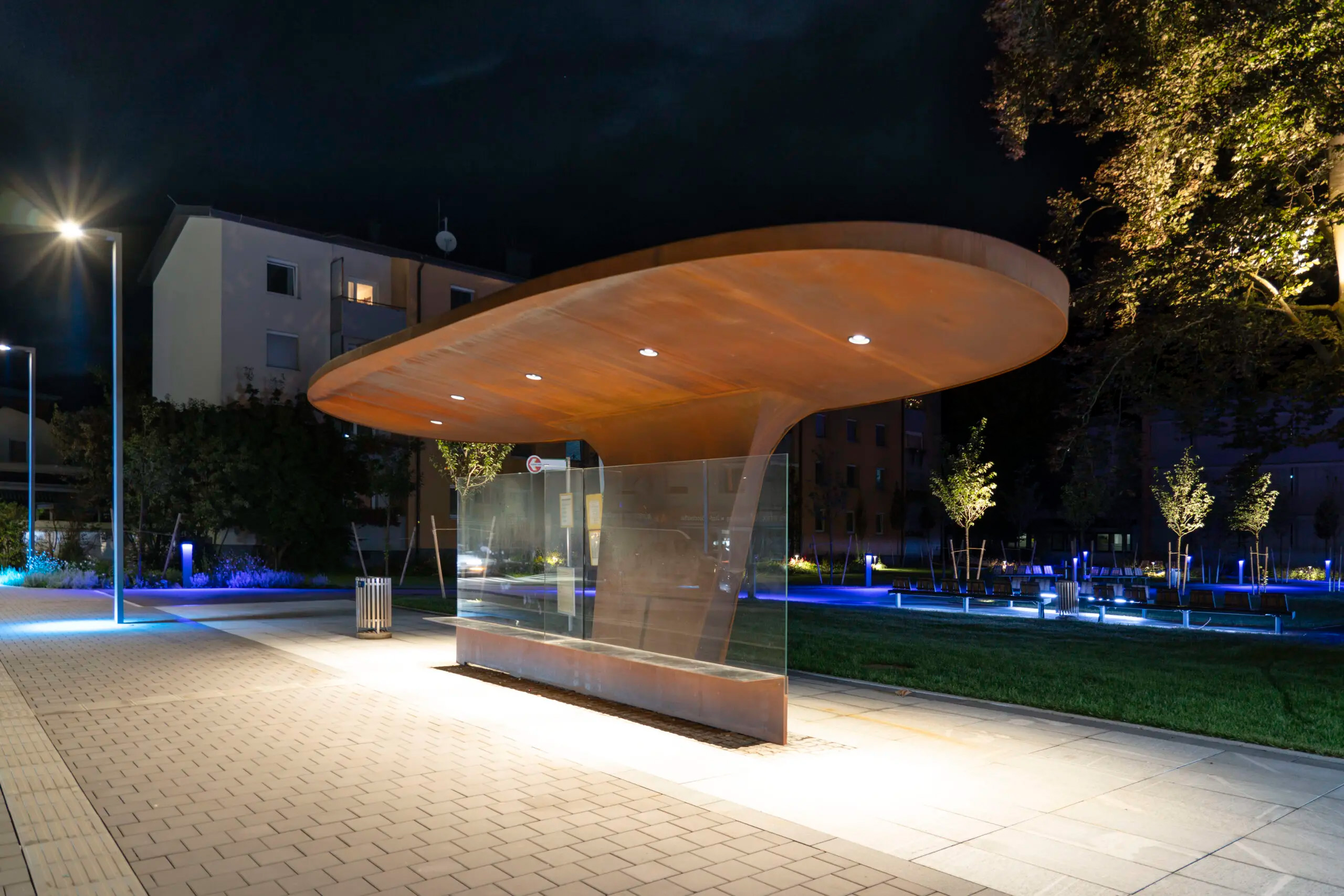
Luminaire Integration: Pole-mounted and bollard luminaires illuminate streets, pathways and seating areas. Low-level light sources accentuate tree trunks and canopies, while coloured lighting highlights pathways, paved areas and water fountains. Integrated lines of light define selected edges of paved areas and seating zones, complemented by compact recessed luminaires within a covered seating structure.
Spatial Effect: Warmly illuminated tree canopies, coloured ground surfaces and moving water forms establish distinct spatial focal points. Darker areas between them preserve the depth of the park landscape, while illuminated pathways and recurring points of light provide orientation and visual continuity. The park’s nocturnal appearance ranges from restrained lighting accents to more expressive effects created through colour.
Questions About Lighting Design for Public Parks and Open Spaces
- What are the key lighting design requirements for a publicly accessible urban park?
An urban park brings together pathways, seating areas, vegetation and often adjacent roads and public spaces. At Stadtpark Althofen, these different spatial elements are distinguished through pole-mounted and bollard luminaires, targeted tree lighting and coloured illumination of selected surfaces, without the need to light the entire landscape uniformly.
- How can lighting support wayfinding and orientation in a public park?
Recurring points of light and continuously illuminated pathways help make routes and transitions between spaces clearly recognisable. In Althofen, bollard and pole-mounted luminaires accompany the paths, while coloured lighting provides additional emphasis along selected routes.
- How can seating areas in an urban park be illuminated without separating them from the surrounding landscape?
Localised lighting can make seating areas visible while maintaining their connection to adjacent pathways. At Stadtpark Althofen, bollard luminaires and partially integrated lighting accents within the street furniture fulfil this role, while illuminated vegetation establishes a broader spatial connection.
- What role does tree lighting play in the nocturnal design of public green spaces?
Large trees can remain prominent landmarks and spatial reference points after dark. At Stadtpark Althofen, low-level lighting highlights trunks, branches and canopies, while darker spaces between the trees preserve the depth of the park landscape.
- How can an illuminated water feature become the focal point of a public square?
Targeted lighting reveals the movement of the fountains and gives the water a distinct spatial presence. In Althofen, the coloured water forms are complemented by reflections across wet surfaces and illuminated edges of the paved area, allowing the water feature and its surroundings to be experienced as a coherent public gathering space.
- How can park lighting be connected to the surrounding streetscape?
A lighting design can use recurring elements and coordinated brightness levels to establish visual continuity between park pathways, public squares and adjacent streets. At Stadtpark Althofen, pole-mounted luminaires, illuminated groups of trees and selected colour accents create a visual connection between the park landscape and its urban surroundings.


