Hotel Imperial
Vienna |Hotel, Exterior

Project Description
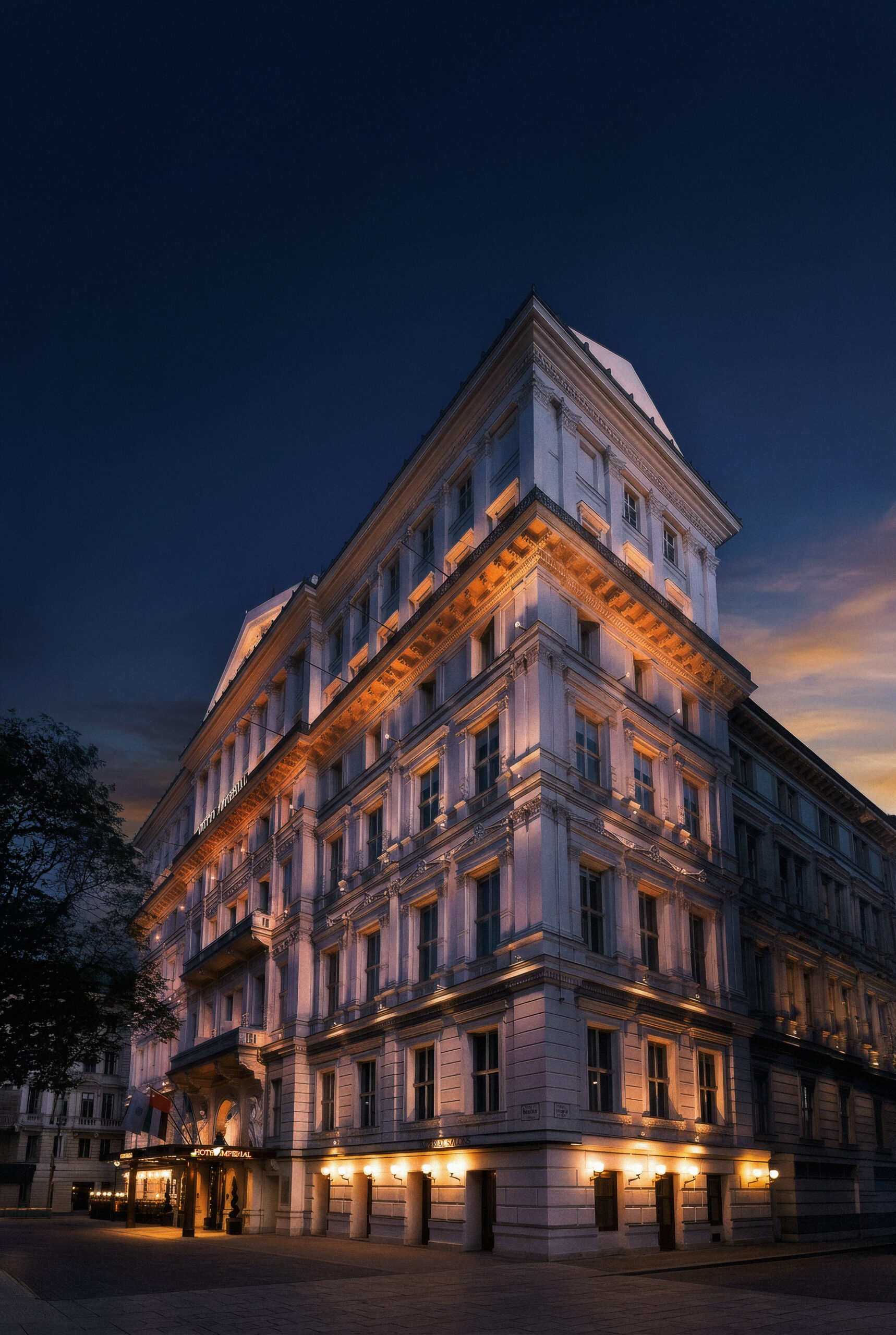
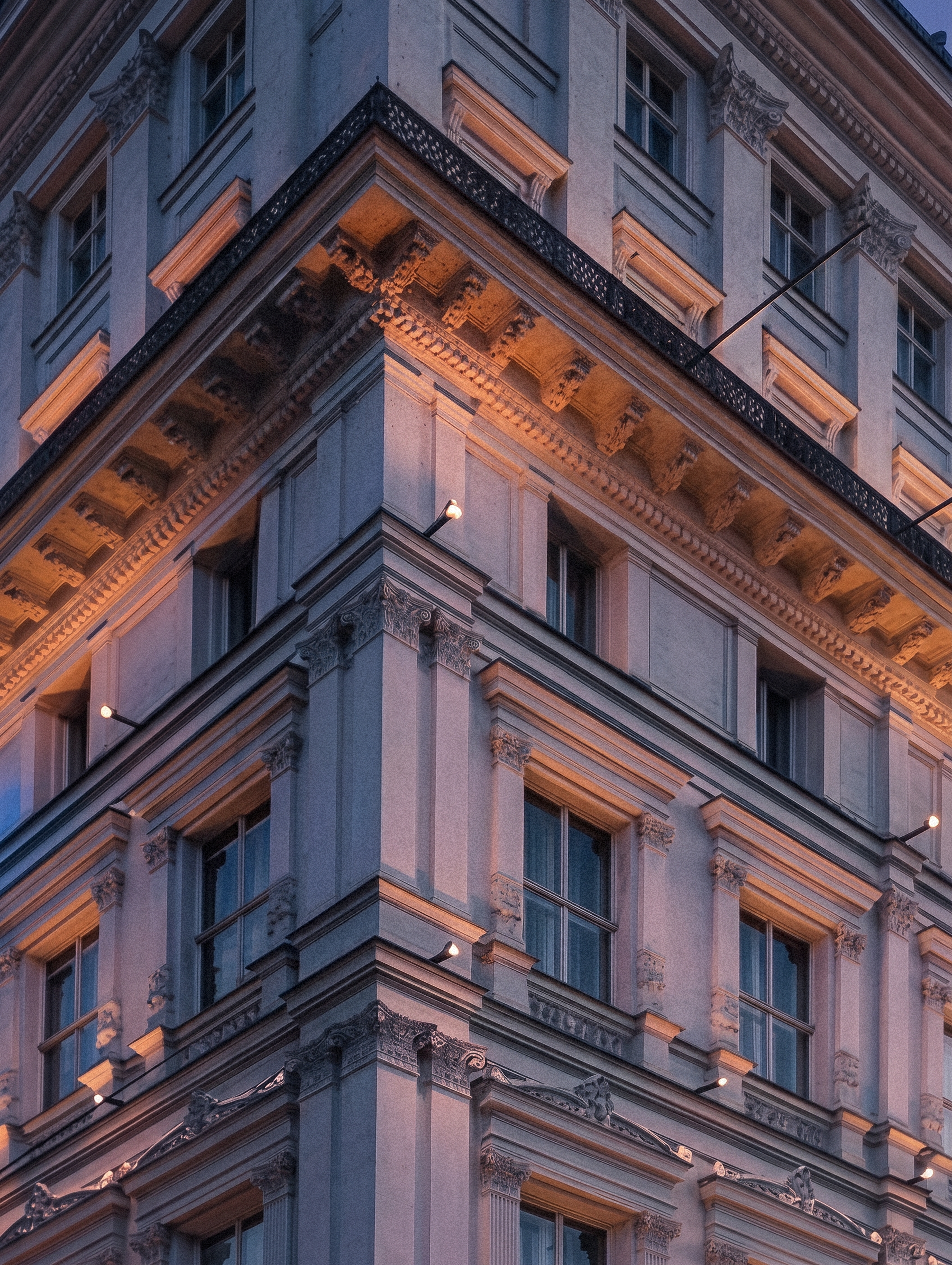
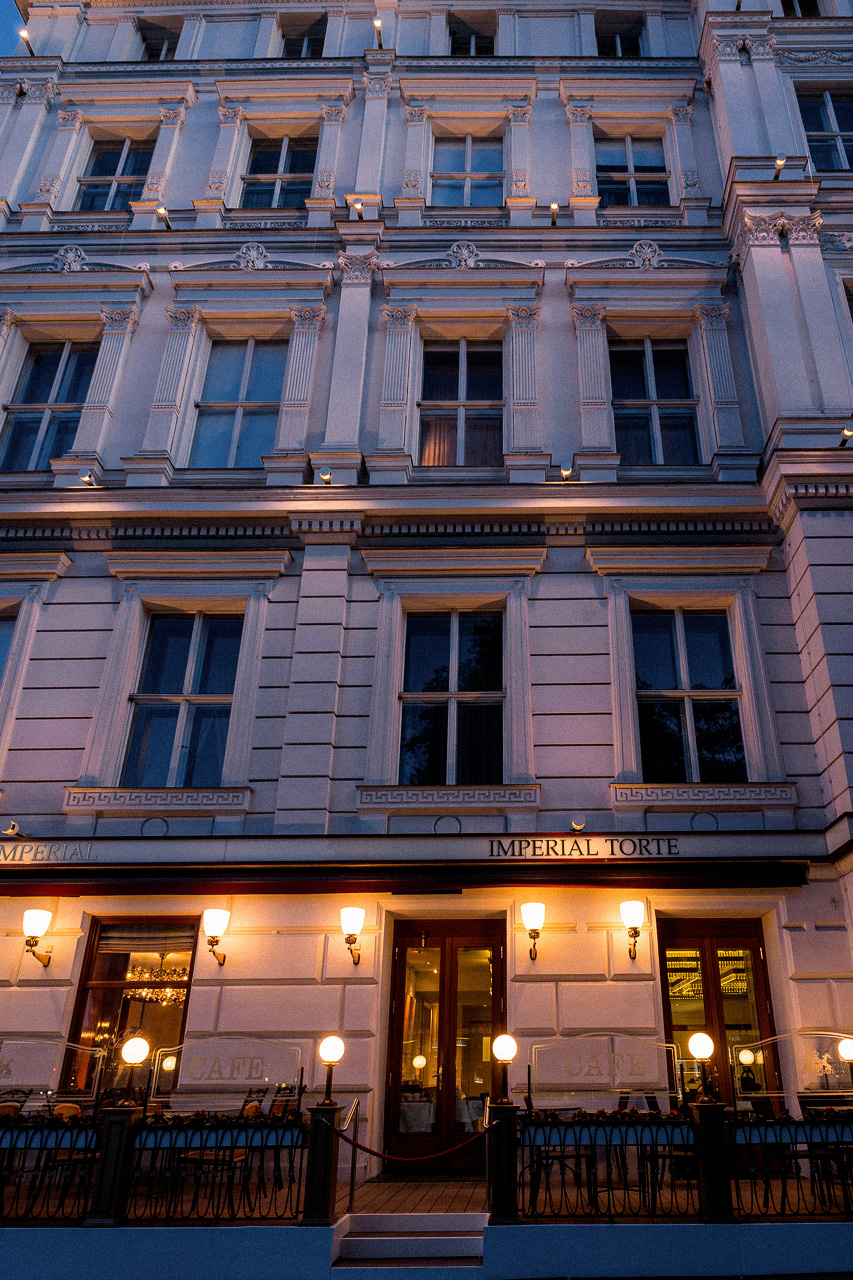
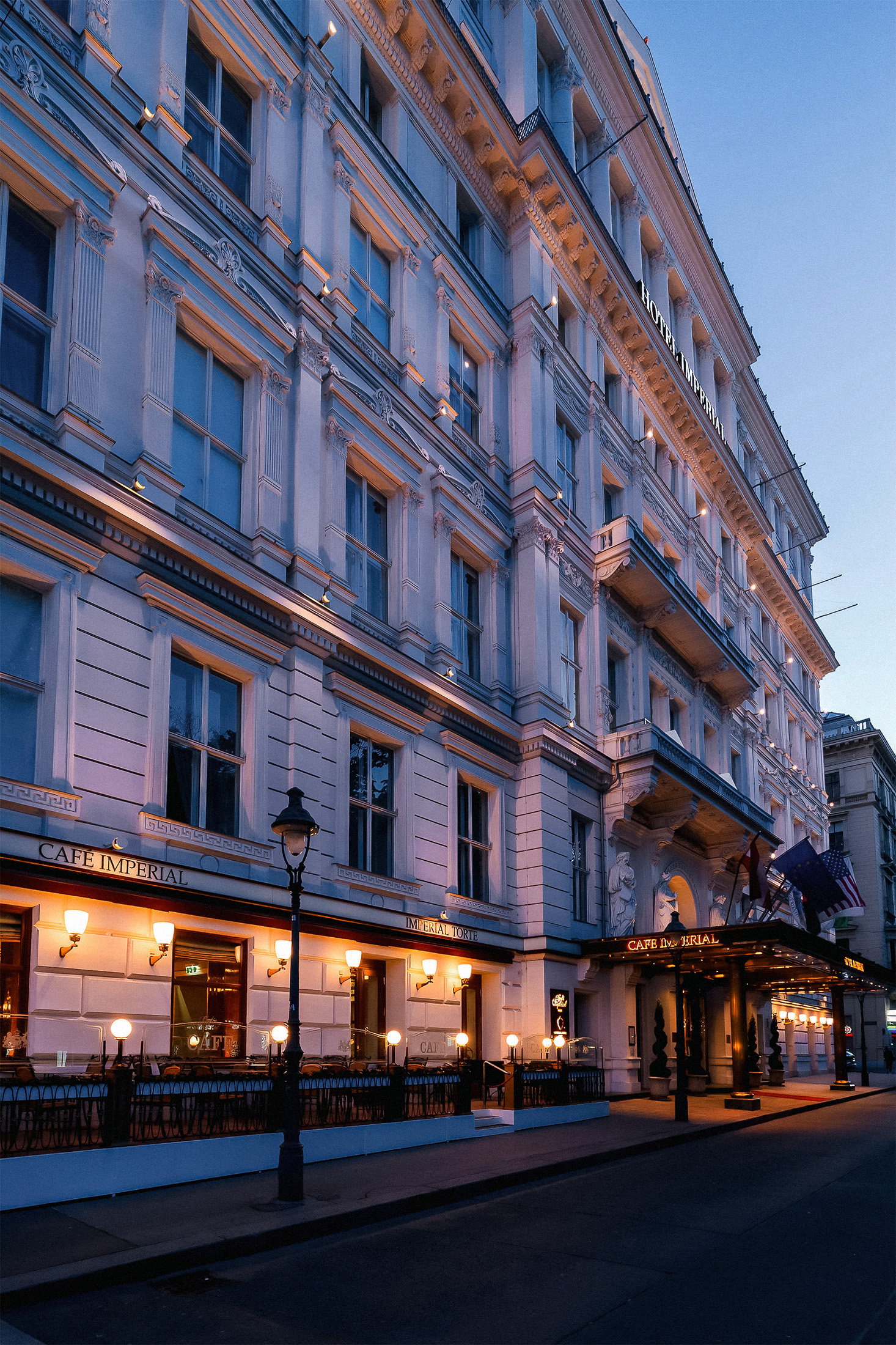
The historic façade of Hotel Imperial has a strongly articulated three-dimensional structure. After dark, the lighting therefore focuses on the architectural elements that make cornices, window axes, frames and reliefs perceptible as spatial components of the façade.
Targeted lighting accents fall on projections, recesses and ornamental details. Light and shadow respond to the different façade layers and reinforce their three-dimensional character rather than making the building envelope appear as a uniformly bright surface.
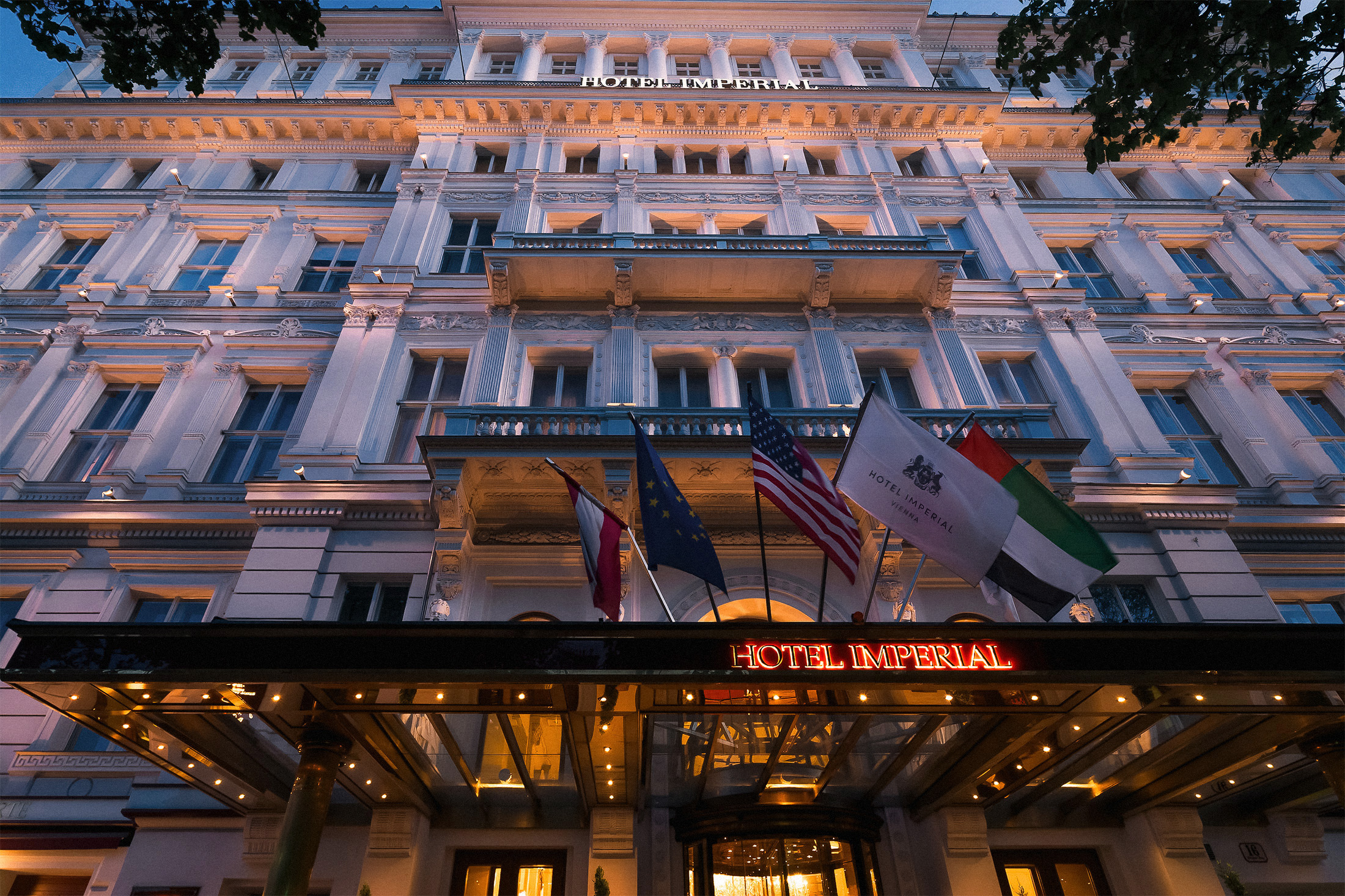
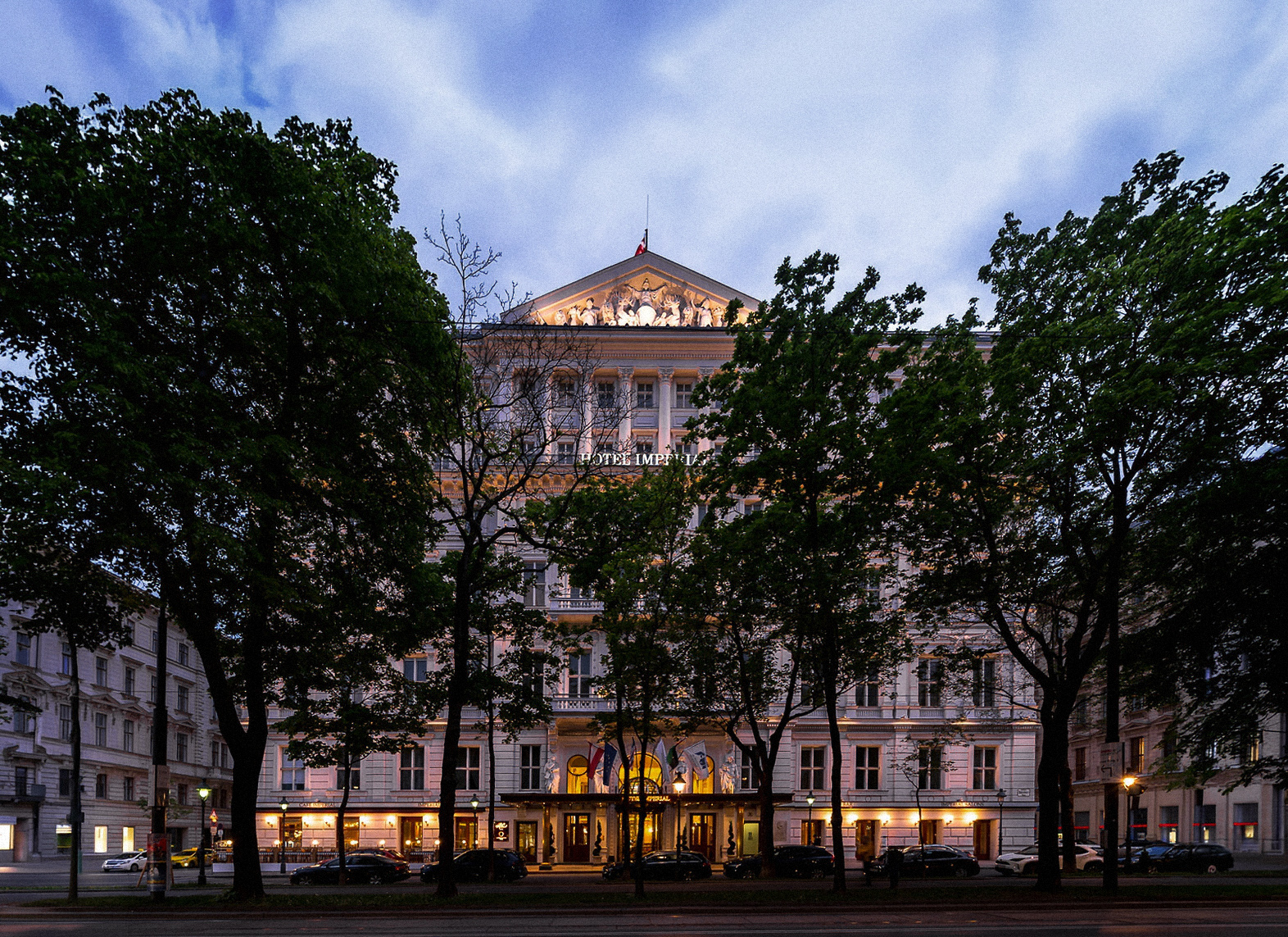
The horizontal rhythm of the storeys and the vertical façade order remain legible across the full height of the building. A greater density of light in the base and entrance zones marks the street-level layer, while individual accents continue up to the upper termination of the building.
The historic architecture is therefore not reinterpreted, but made visible in its existing depth of detail. The lighting works with the relief of the façade and allows its ornamental and spatial qualities to emerge in a differentiated way after dark.
Project Information
Architecture Type: Historic, multi-storey hotel architecture with a strongly articulated façade, cornices, window axes, ornamentation and three-dimensional architectural elements.
Lighting Concept & Design Approach: The lighting focuses on the three-dimensional structure of the historic façade. Selective lighting accents highlight projections, cornices, frames and reliefs, while different zones of light and shadow make the horizontal and vertical façade order visible across the full height of the building.
Luminaire Integration: Light sources positioned close to and in some cases directly on the architecture for precise local illumination, complemented by integrated points of light in the entrance area.
Spatial Effect: A three-dimensionally differentiated façade appearance in which historic details, reliefs and different architectural layers remain spatially perceptible after dark.
Questions about lighting historic façades
- How can light give historic façade details greater three-dimensional definition?
Directed light creates different levels of brightness and shadow on projections, cornices and reliefs. This makes the different layers of a historic façade more clearly perceptible in three dimensions.
- Which façade elements are emphasised by light at Hotel Imperial?
The lighting incorporates elements including cornices, window axes, ornamental details, the entrance area and the upper termination of the building. This keeps the characteristic architecture legible across the full height of the façade.
- Warum eignet sich selektive BeWhy is selective lighting particularly suitable for strongly articulated historic façades?leuchtung besonders für stark gegliederte historische Fassaden?
Selective lighting can make the existing three-dimensionality visible in a targeted way. Uniform illumination would make the differences between projections, recesses and ornamentation less distinct.
- How do light and shadow create spatial depth on a façade?
Directed light causes projecting elements to appear brighter while recessed areas and shadow zones remain darker. These contrasts reveal the spatial layering of the façade.
- How can a multi-storey historic façade be illuminated across its full height?
Defining horizontal and vertical façade elements can be selectively addressed at different building heights. At Hotel Imperial, the lighting continues from the base zone to the upper termination of the building.
- How can historic architecture be illuminated without imposing a new order on it?
The lighting follows the existing articulation and details of the building. It makes their structure visible rather than overlaying the façade with additional graphic patterns of light.