Restaurant Hubert Wallner
Dellach |Gastronomy
Project Description
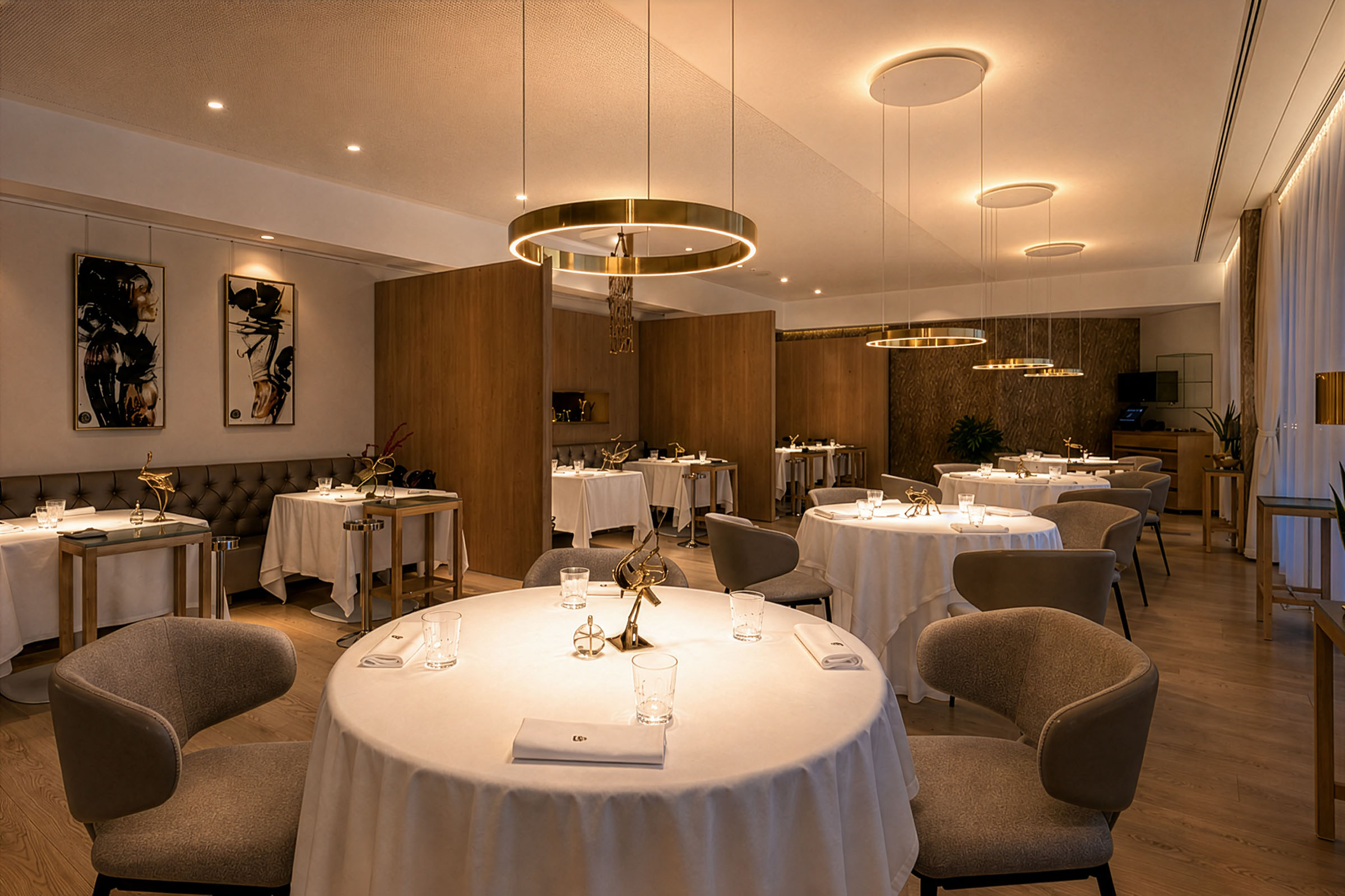
At Restaurant Hubert Wallner, the lighting design establishes a clear hierarchy within the dining space. The tables form the primary visual focus and are deliberately highlighted, while the background and spatial boundaries remain at lower light levels.
Directed light is focused precisely on the areas where food, table settings and materials are meant to be experienced. Additional accents throughout the space prevent the tables from appearing isolated and maintain a visual connection between foreground and surroundings.
Rather than relying on uniform illumination, the concept is defined by carefully balanced levels of brightness. Illuminated table surfaces, more subdued areas in between and selective accents create a visual hierarchy that draws attention towards the dining experience.
In this way, the lighting supports the character of fine dining without becoming a dominant design element in its own right. Light brings table, food, materials and space into a carefully balanced relationship.
Project Information
Architecture Type: High-end hospitality interior with an open dining space, defined table areas and different spatial background layers.
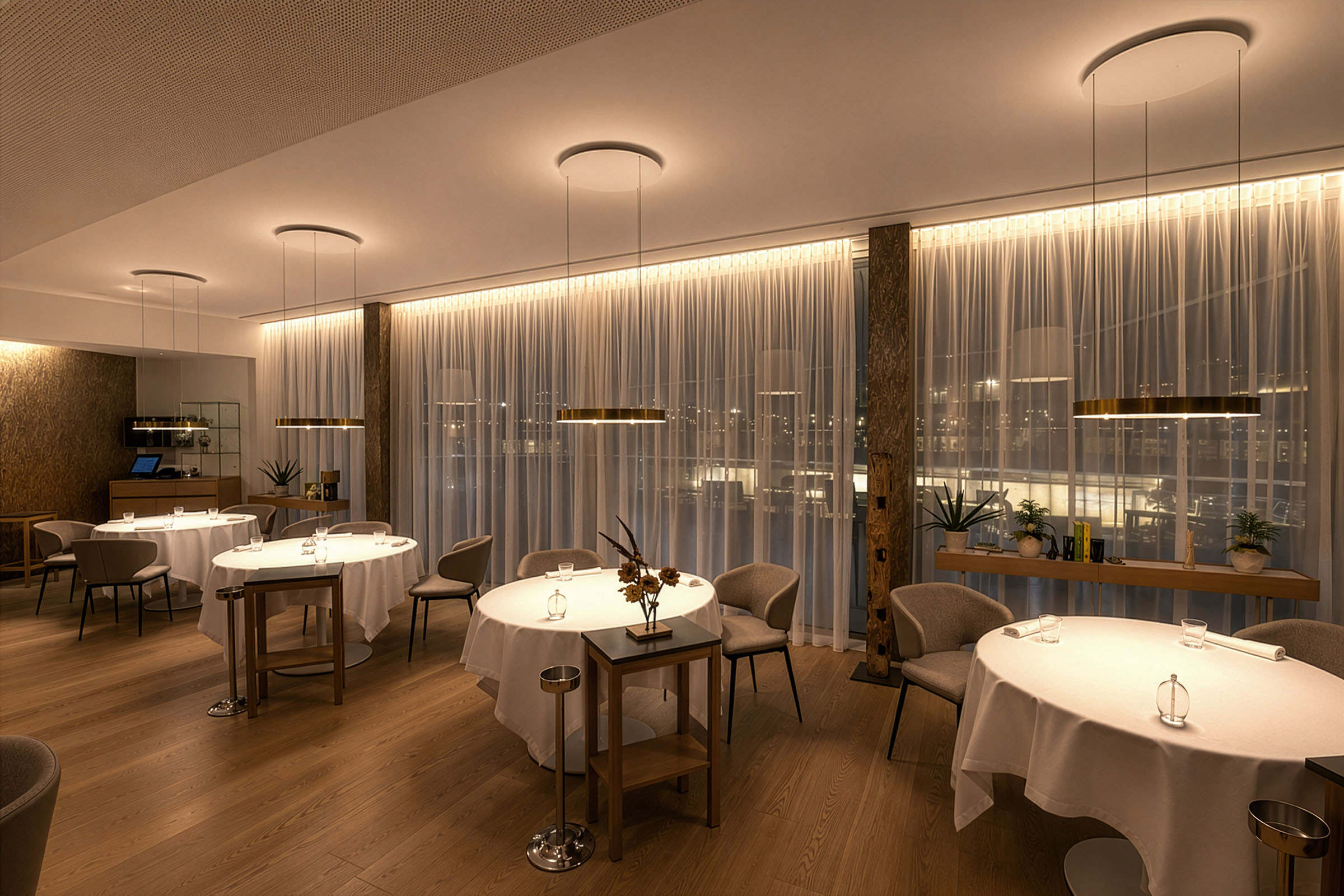
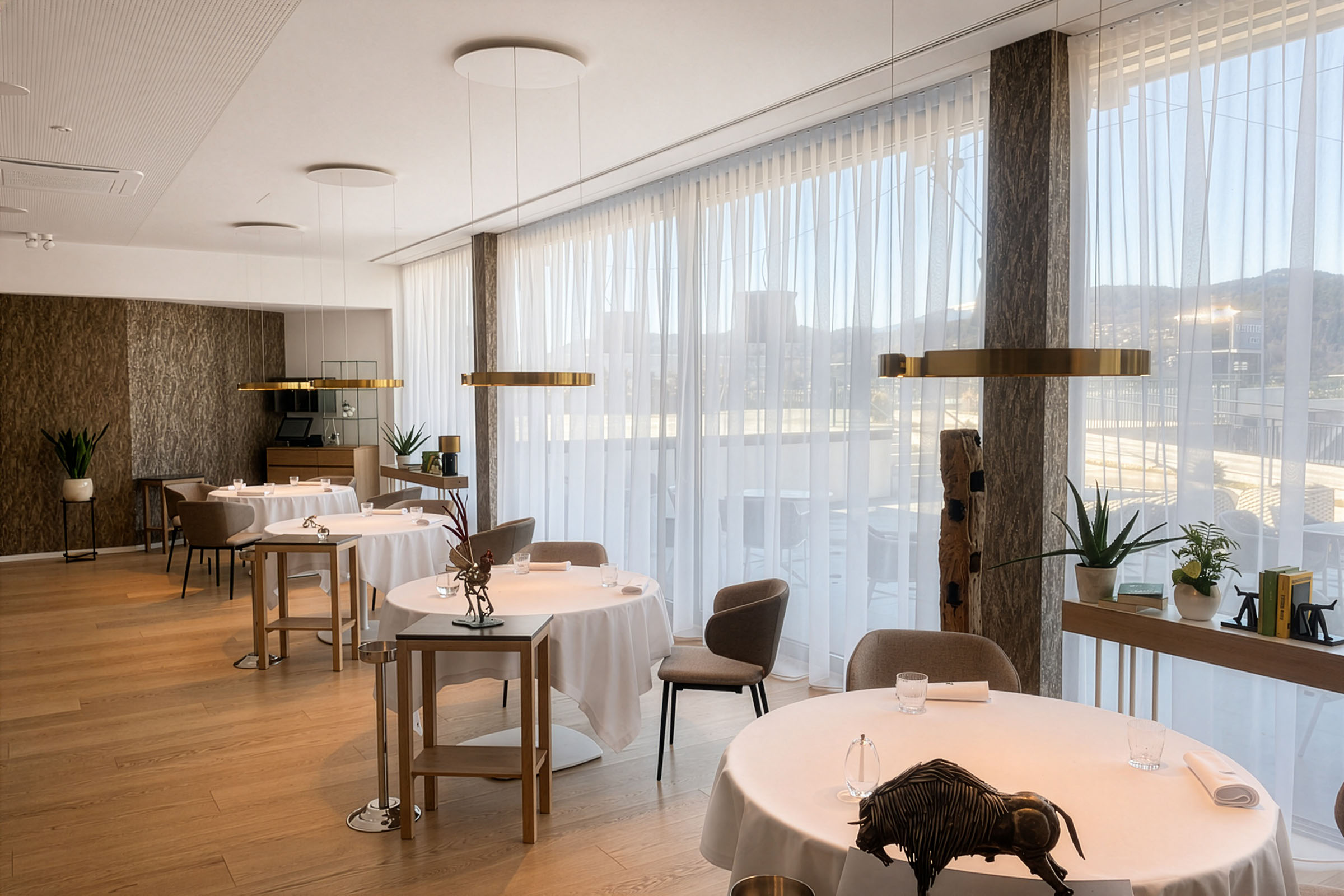
Lighting Concept & Design Approach: The lighting design establishes a clear hierarchy between the table, dining area and spatial background. Directed points of light concentrate brightness on the central level of use, while subdued intermediate areas and complementary accents preserve the space as a coherent environment.
Luminaire Integration: Predominantly directed light sources discreetly integrated into ceiling and spatial structures, complemented by individual lighting accents in background and lounge areas.
Spatial Effect: A focused, high-quality dining environment with clear visual priority given to the tables and controlled transitions between the illuminated level of use and the more restrained surroundings.
Questions about fine dining lighting
- What requirements does lighting design need to meet in a fine dining restaurant?
In fine dining, light must support both functional perception and the presentation of tables, food and materials. Precise coordination of brightness, direction and contrast is therefore more important than illuminating the entire dining space as uniformly as possible.
- How are food and table settings selectively illuminated in a restaurant?
Directed light concentrates brightness on the table surface and gives it greater visual priority. Food, glasses, tableware and materials remain clearly perceptible without requiring the entire space to have the same brightness level.
- Why is background brightness important in restaurant lighting?
The background has a significant influence on how strongly a table area stands out visually. When it is deliberately kept more subdued, a clear focal point is created, while additional lighting accents prevent the rest of the space from disappearing completely.
- How is a visual hierarchy created within a dining space?
A hierarchy is created through different lighting intensities between table surfaces, dining areas and the spatial background. At Restaurant Hubert Wallner, this graduation directs attention towards the dining experience.
- Why should a fine dining restaurant not be equally bright throughout?
Uniform brightness would reduce the visual prioritisation of tables and food. Different brightness levels instead enable targeted perception and support the focused character of the restaurant.
- How can functional restaurant lighting remain visually discreet?
When directed light sources are precisely positioned and largely integrated into the architecture, the technology itself recedes into the background. What is perceived above all is the effect of the light on tables, materials and space.