Parkanlage CM
Carinthia |Private, Exterior
Project Description
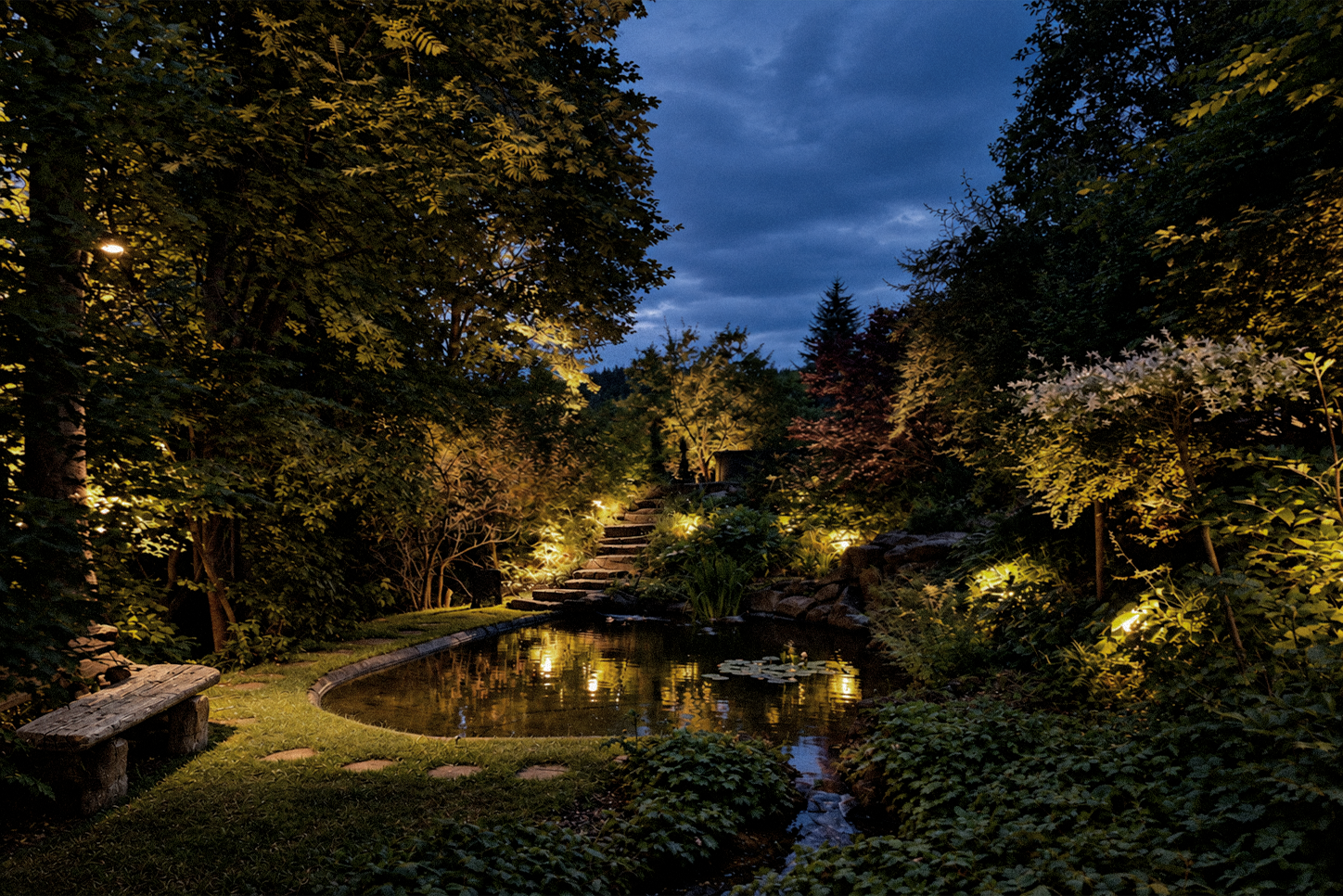
At night, the spatial order of Parkanlage CM changes. Trees, vegetation, natural stone and water are not made uniformly visible, but emerge from the darker landscape at different distances and intensities. Light therefore interprets the garden as a sequence of spatial layers.
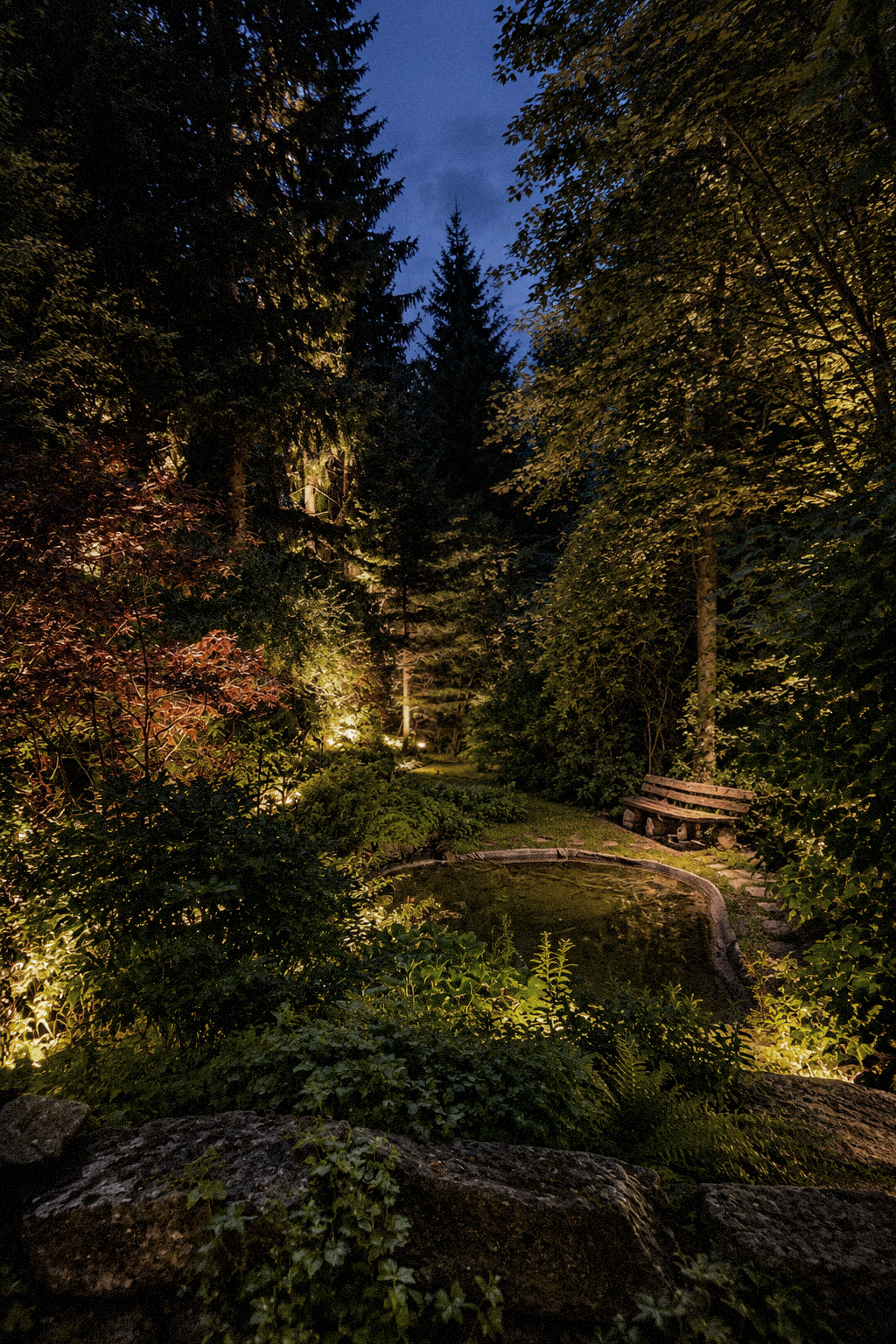
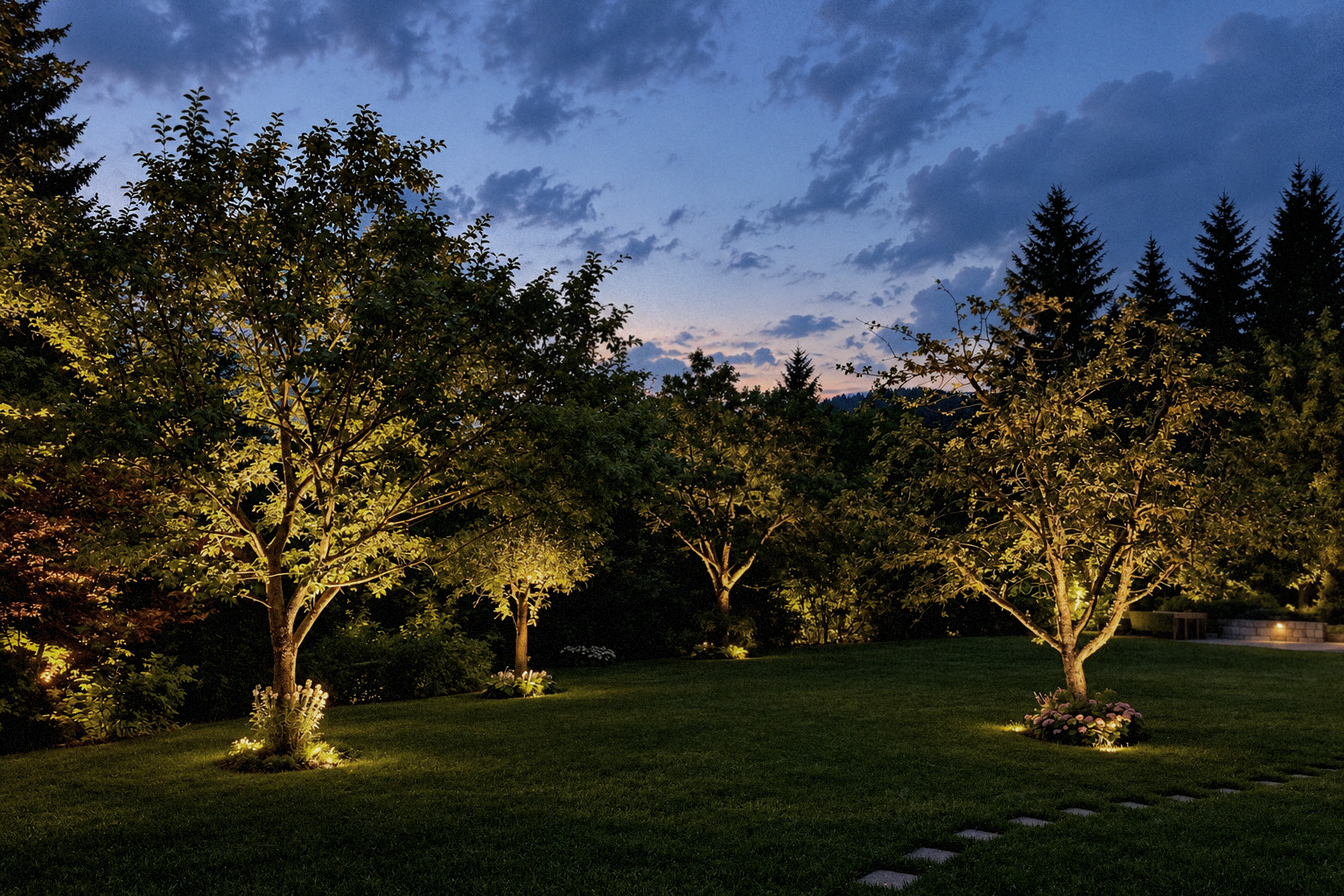
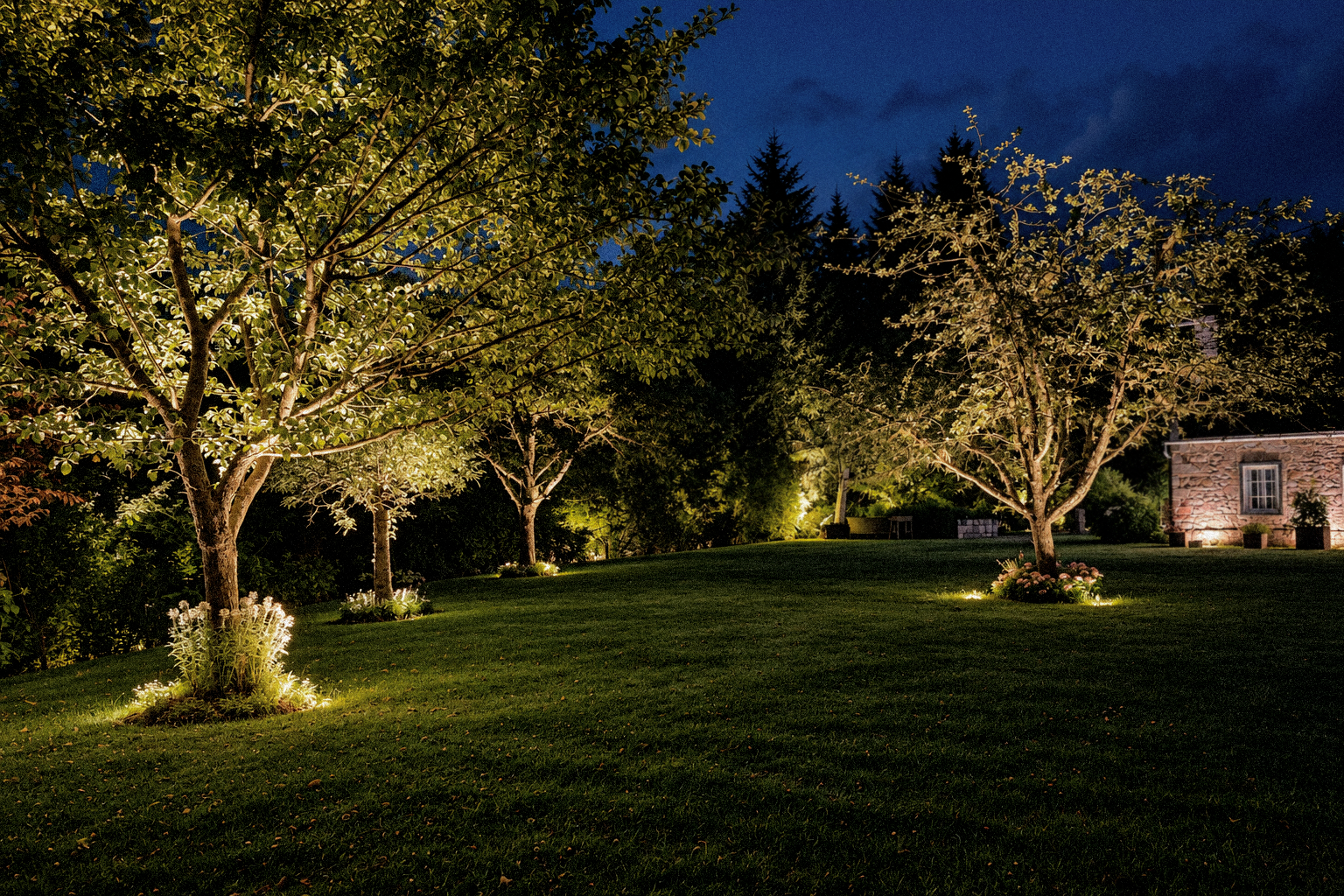
Large trees form the most important visual reference points. Directed light models trunks, branches and canopies, while low-level accents highlight smaller trees and planting. Open areas in between deliberately remain subdued, giving the illuminated elements distance and spatial depth.
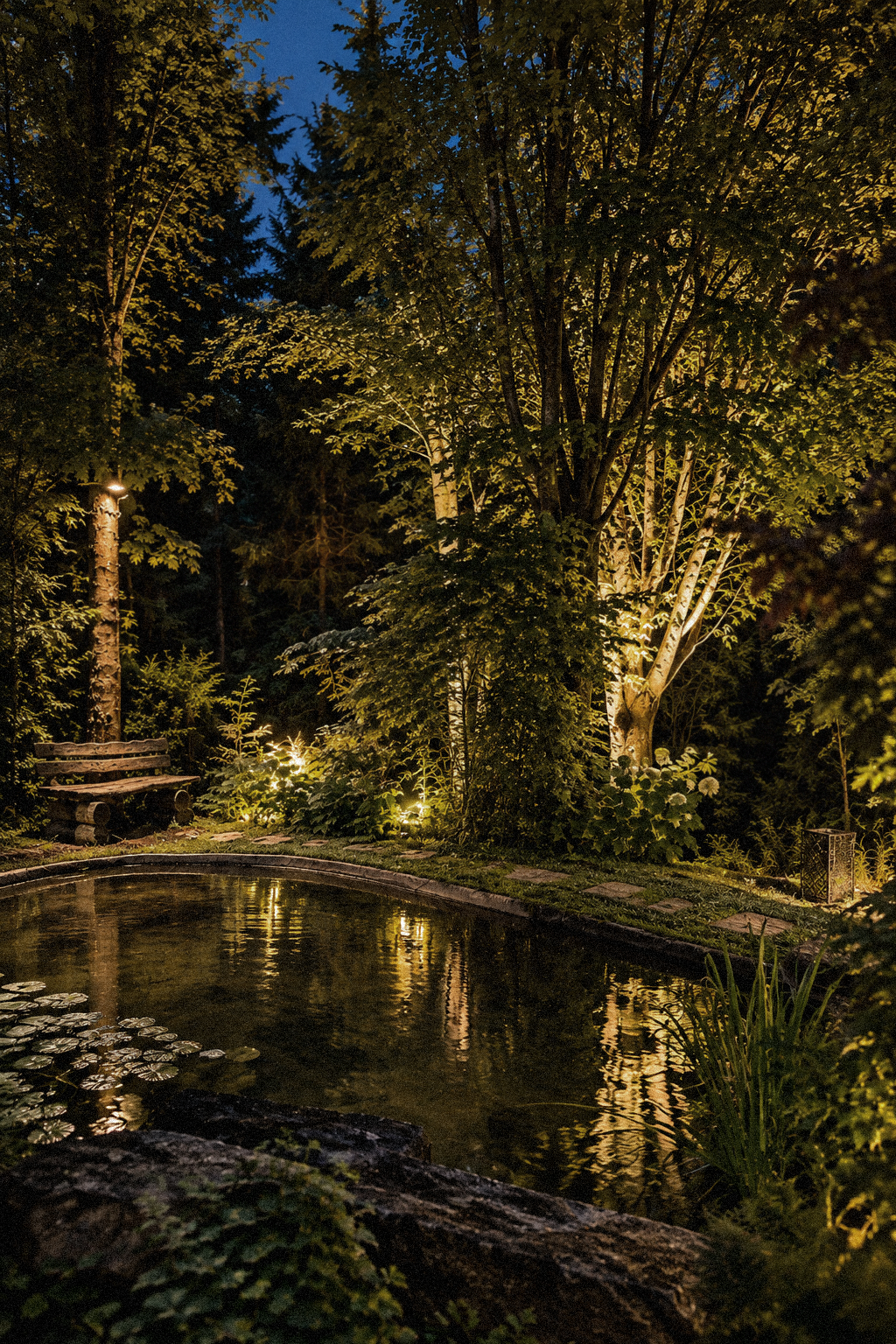
At the pond, this effect changes again. The water surface remains largely dark and instead captures reflections of the surrounding vegetation. Light therefore appears a second time – reflected, fragmented and transformed by the movement of the water.
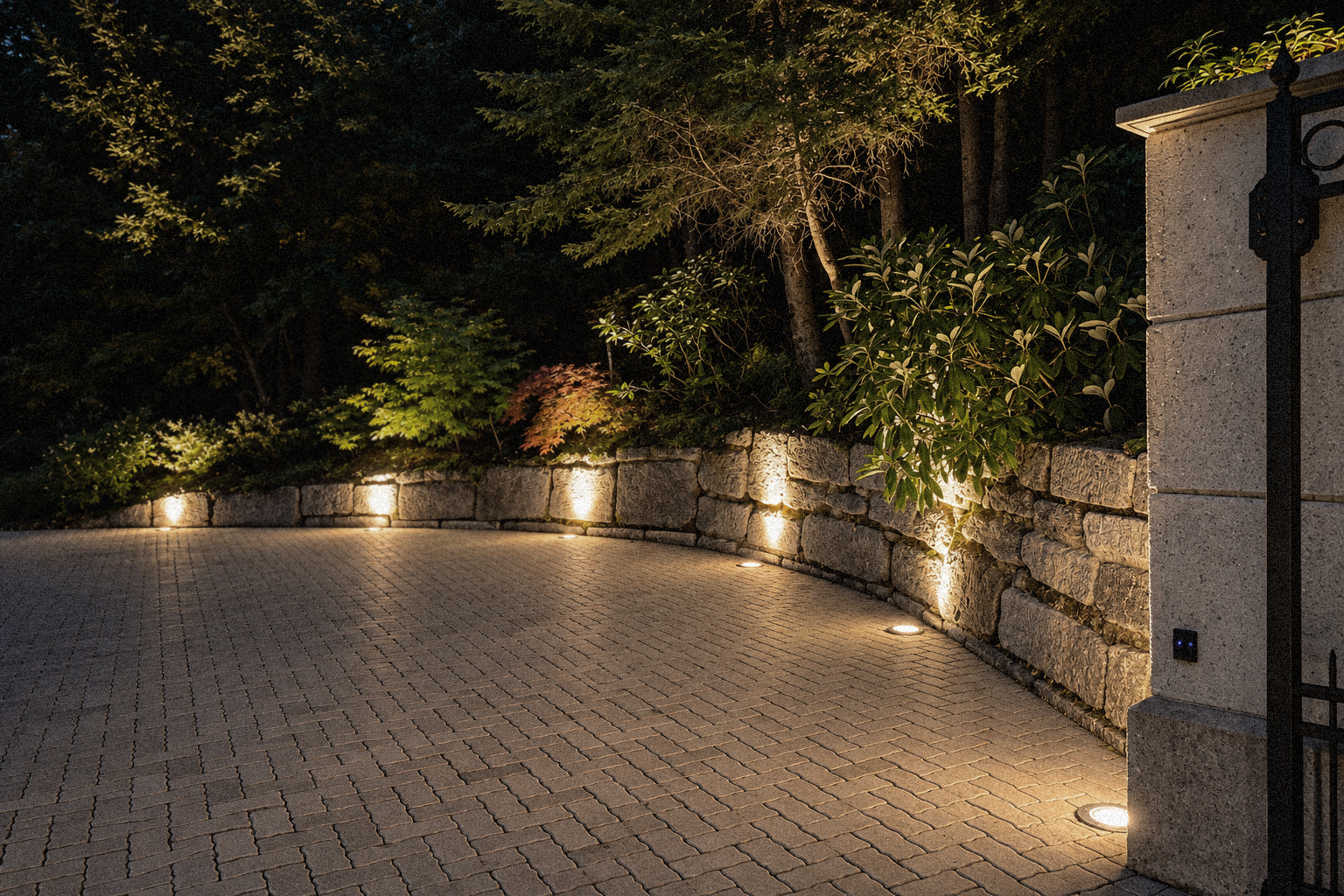
Along paths and natural stone walls, the lighting also remains closely connected to the landscape. At night, the park is therefore defined not by uniform brightness, but by a precise selection of what becomes visible – and by the space that remains between these illuminated elements.
Project Information
Architecture Type: Extensive private park and garden landscape with mature trees of varying heights, open lawns, dense vegetation, natural stone walls, pathways and an organically shaped pond.
Lighting Concept & Design Approach: The lighting design interprets the landscape at night as a sequence of differently illuminated spatial layers. Distinctive trees, smaller vegetation, planting, natural stone and pathways are selectively highlighted, while large areas deliberately remain dark. Different distances and lighting intensities create layers of depth throughout the park.
Luminaire Integration: Light sources positioned predominantly at ground level and within the landscape illuminate selected trees, groups of vegetation and natural stone surfaces from below or from the side. Integrated points of light additionally accompany paths and paved areas. The luminaires themselves largely recede from view, allowing their effect on vegetation, materials and the landscape to become the primary focus.
Spatial Effect: Illuminated tree canopies, trunks and low-level vegetation create distinct foreground, middle-ground and background layers within the darker landscape. At the pond, reflections of the surrounding lighting extend this spatial layering, while unlit areas create distance between the individual lighting compositions.
Questions About Lighting Design for Parks and Gardens
- How can lighting give a park spatial depth at night?
Spatial depth does not necessarily require uniform illumination of the entire site. By selectively highlighting trees and groups of vegetation at different distances, foreground, middle-ground and background layers emerge, making the spatial extent of the park perceptible even at night.
- How can large trees be illuminated so that the trunk and canopy retain their three-dimensional appearance?
Directed light from different positions can highlight the trunk, branches and selected areas of the canopy without illuminating the entire tree uniformly. The resulting contrasts between light and shadow preserve its three-dimensional character and make large trees important spatial reference points within the landscape.
- Why are large lawn areas in a park not illuminated in their entirety?
Darker open areas create distance between illuminated trees and groups of vegetation, thereby reinforcing their spatial effect. At Parkanlage CM, the lawn therefore does not become a continuously bright surface, but remains a calm intermediate space between the selected lighting accents.
- How can a pond be integrated into the lighting design without strongly illuminating the water surface itself?
Water can capture light from its surroundings and return it in altered form through reflections. At Parkanlage CM, the water surface remains largely dark, while illuminated vegetation and individual points of light are reflected within it, creating an additional visual layer.
- Why are luminaires in a landscape often positioned as unobtrusively as possible?
When the light source visually recedes, attention is focused more strongly on the tree, plant, stone or terrain itself. In this project, many light sources are positioned close to the ground or within the vegetation, ensuring that the illuminated landscape rather than the luminaire is primarily perceived.
- How can pathway lighting support both orientation and the perception of the landscape?
Orientation lighting can be positioned so that it illuminates not only the path itself but also adjacent materials or vegetation. Along the natural stone wall at Parkanlage CM, low-level points of light therefore support wayfinding while simultaneously revealing the texture and spatial boundary of the wall.


